中国科学院大学学报 ›› 2026, Vol. 43 ›› Issue (1): 115-124.DOI: 10.7523/j.ucas.2024.041
何皓辰, 方正, 卢政达, 肖俊( ), 王颖
), 王颖
收稿日期:2024-03-01
修回日期:2024-05-07
发布日期:2024-06-04
通讯作者:
肖俊
基金资助:
Haochen HE, Zheng FANG, Zhengda LU, Jun XIAO(), Ying WANG
Received:2024-03-01
Revised:2024-05-07
Published:2024-06-04
Contact:
Jun XIAO
摘要:
加工特征识别在计算机辅助设计(CAD)和制造(CAM)中至关重要,是连接CAD和CAM系统的重要环节。研究者们提出了基于规则和基于学习的2类加工特征识别方法,其中基于学习的方法表现更出色且备受关注。然而,现有识别方法面临着几何信息利用不足、加工特征定位不精准、实例分割过程复杂等挑战。针对这些问题,提出PT-MFR,一种基于Point Transformer的CAD模型加工特征识别方法,它执行语义分割和实例分割2个任务,分别预测模型每个面的加工特征语义类别并计算面相似度以分割加工特征实例,综合2个任务得到加工特征识别结果。实验结果表明,提出的方法性能优于现有的其他方法。
中图分类号:
何皓辰, 方正, 卢政达, 肖俊, 王颖. PT-MFR: 一种基于Point Transformer的CAD模型加工特征识别方法[J]. 中国科学院大学学报, 2026, 43(1): 115-124.
Haochen HE, Zheng FANG, Zhengda LU, Jun XIAO, Ying WANG. PT-MFR: a CAD model machining feature recognition method based on Point Transformer[J]. Journal of University of Chinese Academy of Sciences, 2026, 43(1): 115-124.
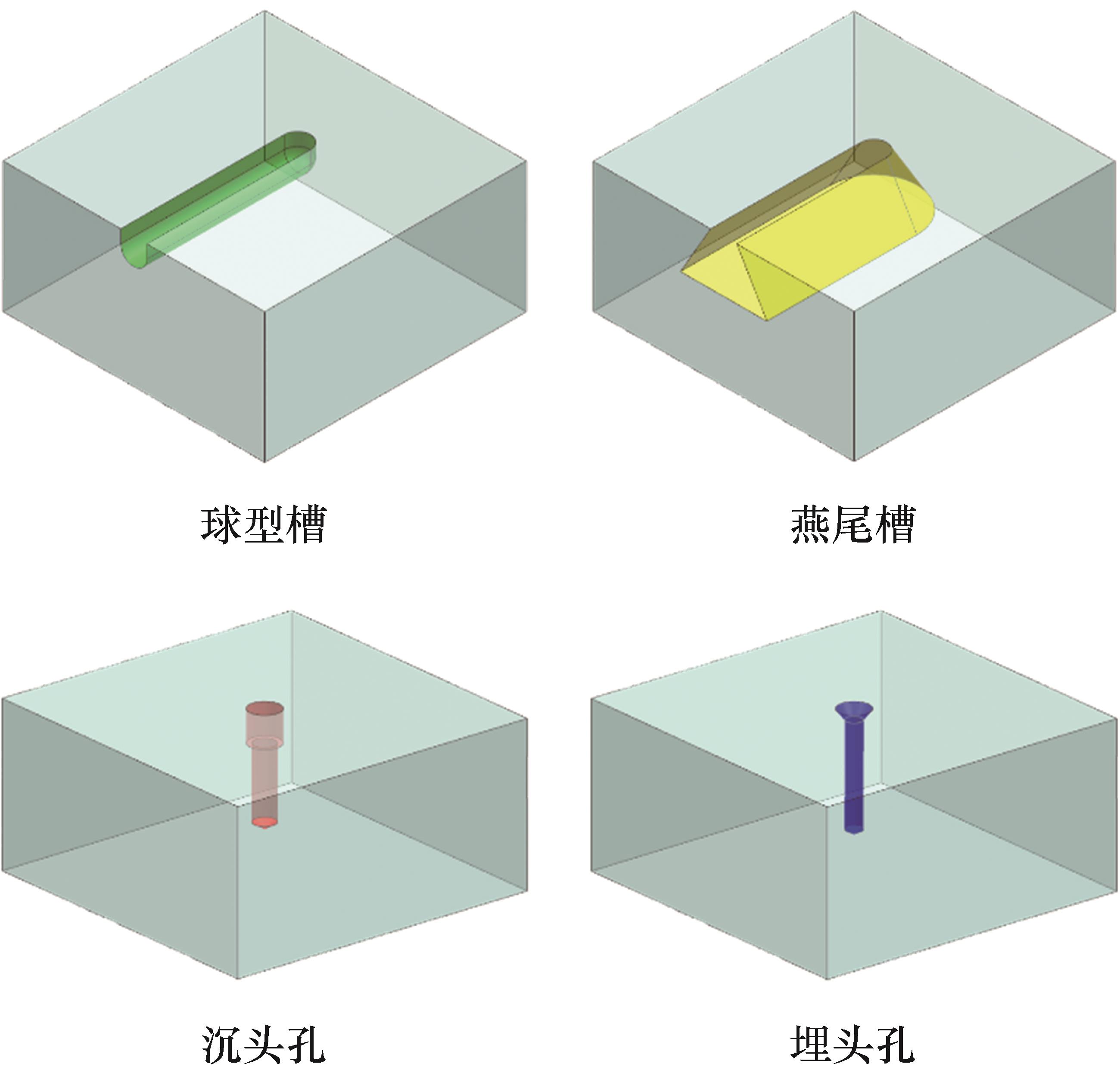
图1 CAD模型中的加工特征示例
Fig.1 Examples of machining features in CAD models
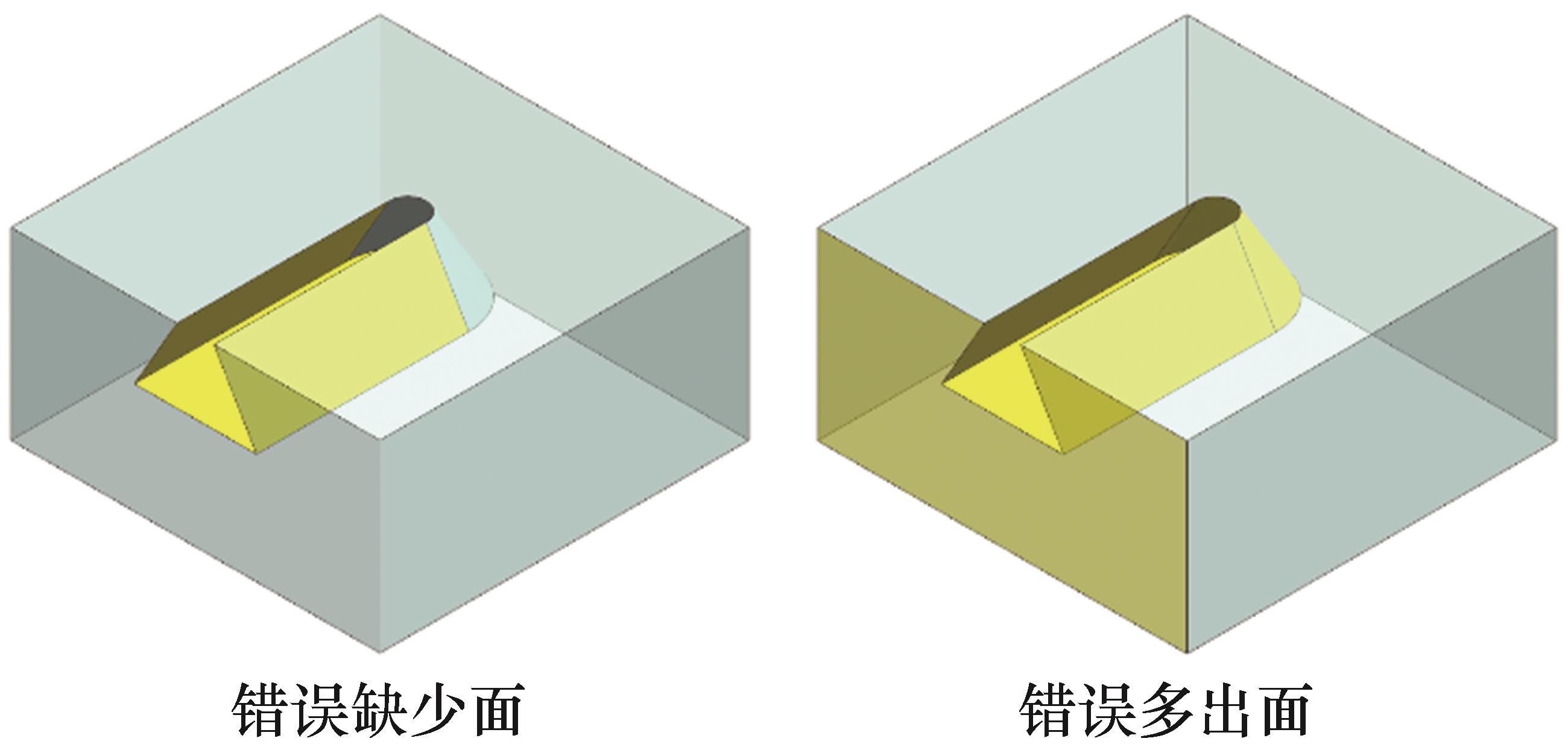
图2 加工特征识别错误示例
Fig.2 Examples of machining feature recognition error
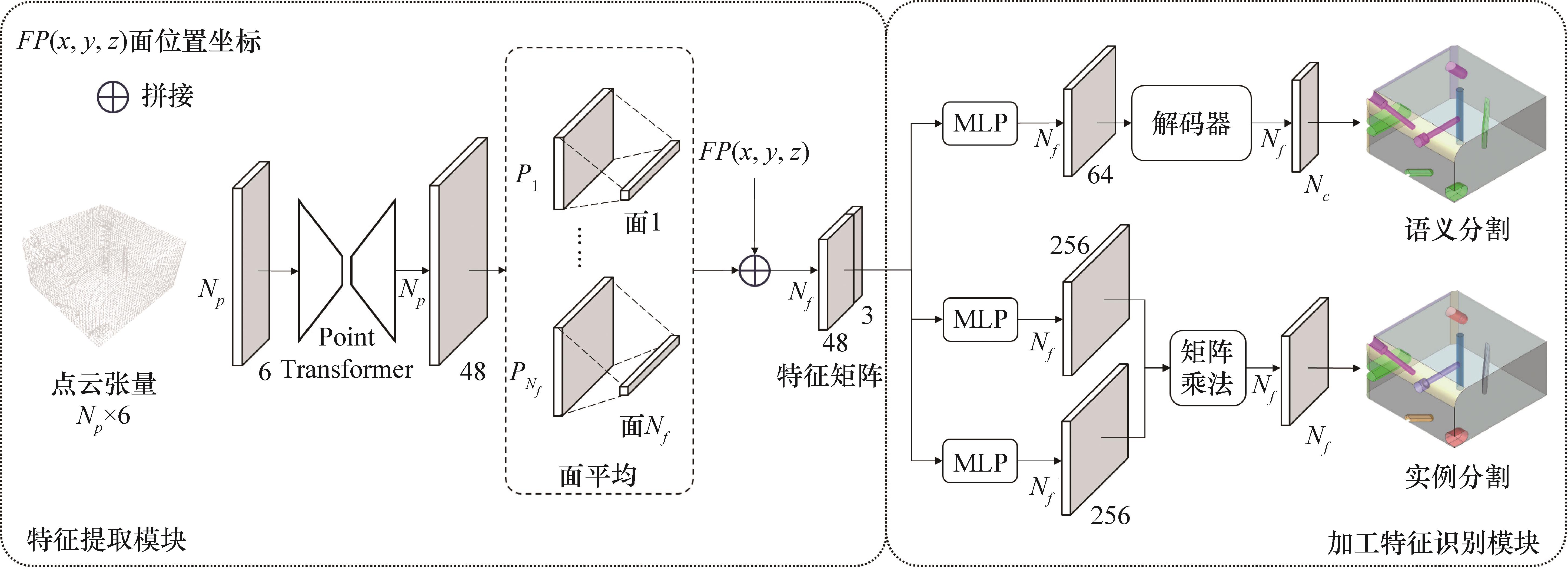
图3 提出的神经网络架构
Fig.3 Architecture of the proposed network
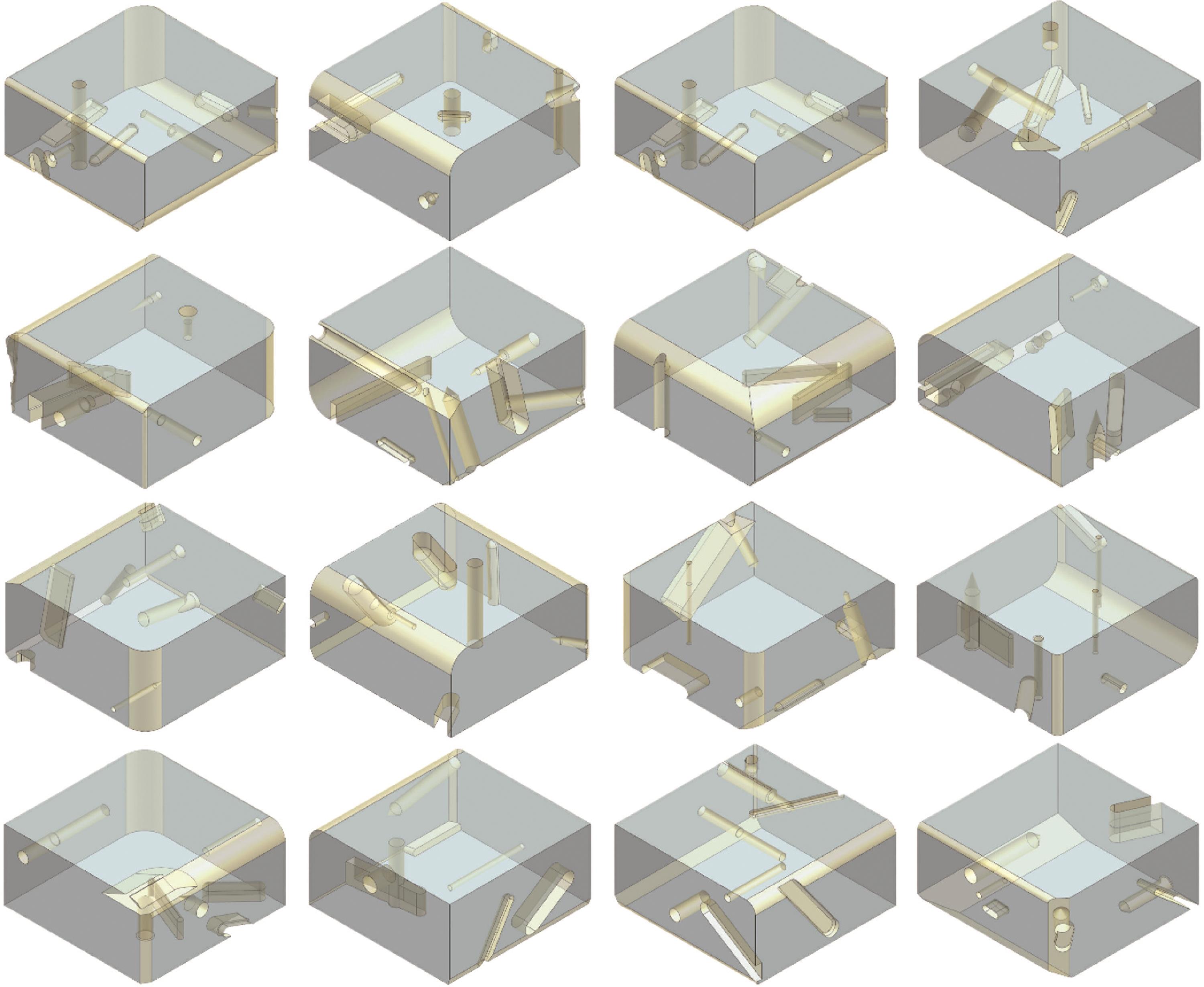
图4 部分生成的CAD模型示例
Fig.4 Some generated CAD models
| 网络 | 语义分割 | 实例分割 | ||||
|---|---|---|---|---|---|---|
| mIoU | Acc | F1 | mIoU | |||
| Cao 等[ | 53.44 | 33.34 | 43.90 | — | — | — |
| Hierarchical CADNet[ | 83.53 | 83.63 | 72.65 | — | — | — |
| ASIN[ | 78.13 | 76.44 | 65.09 | 10.88 | 6.81 | 5.77 |
| AAGNet[ | 88.40 | 89.07 | 79.99 | 53.20 | 60.52 | 55.56 |
| PT-MFR | 90.36 | 89.29 | 82.81 | 60.56 | 70.25 | 63.24 |
表1 对比实验的结果 (%)
Table 1 Results of the comparative experiment
| 网络 | 语义分割 | 实例分割 | ||||
|---|---|---|---|---|---|---|
| mIoU | Acc | F1 | mIoU | |||
| Cao 等[ | 53.44 | 33.34 | 43.90 | — | — | — |
| Hierarchical CADNet[ | 83.53 | 83.63 | 72.65 | — | — | — |
| ASIN[ | 78.13 | 76.44 | 65.09 | 10.88 | 6.81 | 5.77 |
| AAGNet[ | 88.40 | 89.07 | 79.99 | 53.20 | 60.52 | 55.56 |
| PT-MFR | 90.36 | 89.29 | 82.81 | 60.56 | 70.25 | 63.24 |
| 特征提取模块 | 语义分割 | 实例分割 | ||||
|---|---|---|---|---|---|---|
| mIoU | Acc | F1 | mIoU | |||
| PointNet[ | 72.10 | 75.53 | 60.97 | 40.54 | 53.95 | 47.14 |
| DGCNN[ | 80.69 | 82.45 | 71.95 | 34.46 | 50.22 | 44.08 |
| Sparse Conv[ | 74.97 | 73.59 | 61.91 | 41.70 | 54.10 | 47.93 |
| PT-MFR | 90.36 | 89.29 | 82.81 | 60.56 | 70.25 | 63.24 |
表2 特征提取模块消融实验的结果 (%)
Table 2 Results of the feature extraction module ablation experiment
| 特征提取模块 | 语义分割 | 实例分割 | ||||
|---|---|---|---|---|---|---|
| mIoU | Acc | F1 | mIoU | |||
| PointNet[ | 72.10 | 75.53 | 60.97 | 40.54 | 53.95 | 47.14 |
| DGCNN[ | 80.69 | 82.45 | 71.95 | 34.46 | 50.22 | 44.08 |
| Sparse Conv[ | 74.97 | 73.59 | 61.91 | 41.70 | 54.10 | 47.93 |
| PT-MFR | 90.36 | 89.29 | 82.81 | 60.56 | 70.25 | 63.24 |
| 面位置 | 语义分割 | 实例分割 | ||||
|---|---|---|---|---|---|---|
| mIoU | Acc | F1 | mIoU | |||
| 删除面位置 | 89.50 | 87.82 | 81.57 | 37.54 | 51.26 | 45.43 |
| PT-MFR | 90.36 | 89.29 | 82.81 | 60.56 | 70.25 | 63.24 |
表3 面位置消融实验的结果 (%)
Table 3 Results of the face position ablation experiment
| 面位置 | 语义分割 | 实例分割 | ||||
|---|---|---|---|---|---|---|
| mIoU | Acc | F1 | mIoU | |||
| 删除面位置 | 89.50 | 87.82 | 81.57 | 37.54 | 51.26 | 45.43 |
| PT-MFR | 90.36 | 89.29 | 82.81 | 60.56 | 70.25 | 63.24 |
| 损失函数 | 语义分割 | 实例分割 | ||||
|---|---|---|---|---|---|---|
| mIoU | Acc | F1 | mIoU | |||
| MSE损失 | 85.12 | 87.71 | 79.35 | 10.07 | 6.69 | 5.33 |
| PT-MFR | 90.36 | 89.29 | 82.81 | 60.56 | 70.25 | 63.24 |
表4 损失函数消融实验的结果 (%)
Table 4 Results of the loss function ablation experiment
| 损失函数 | 语义分割 | 实例分割 | ||||
|---|---|---|---|---|---|---|
| mIoU | Acc | F1 | mIoU | |||
| MSE损失 | 85.12 | 87.71 | 79.35 | 10.07 | 6.69 | 5.33 |
| PT-MFR | 90.36 | 89.29 | 82.81 | 60.56 | 70.25 | 63.24 |
| 语义分割 | 实例分割 | |||||
|---|---|---|---|---|---|---|
| mIoU | Acc | F1 | mIoU | |||
| 1∶1 | 90.26 | 89.63 | 82.76 | 59.21 | 69.33 | 62.21 |
| 1∶5 | 90.94 | 89.87 | 83.68 | 59.91 | 69.11 | 62.16 |
| 1∶10 | 90.36 | 89.29 | 82.81 | 60.56 | 70.25 | 63.24 |
| 1∶20 | 86.49 | 81.85 | 77.20 | 61.83 | 71.06 | 64.04 |
| 1∶50 | 86.92 | 82.97 | 78.02 | 60.78 | 70.13 | 63.16 |
表5 损失函数权重消融实验的结果 (%)
Table 5 Results of loss function weight ablationexperiment
| 语义分割 | 实例分割 | |||||
|---|---|---|---|---|---|---|
| mIoU | Acc | F1 | mIoU | |||
| 1∶1 | 90.26 | 89.63 | 82.76 | 59.21 | 69.33 | 62.21 |
| 1∶5 | 90.94 | 89.87 | 83.68 | 59.91 | 69.11 | 62.16 |
| 1∶10 | 90.36 | 89.29 | 82.81 | 60.56 | 70.25 | 63.24 |
| 1∶20 | 86.49 | 81.85 | 77.20 | 61.83 | 71.06 | 64.04 |
| 1∶50 | 86.92 | 82.97 | 78.02 | 60.78 | 70.13 | 63.16 |
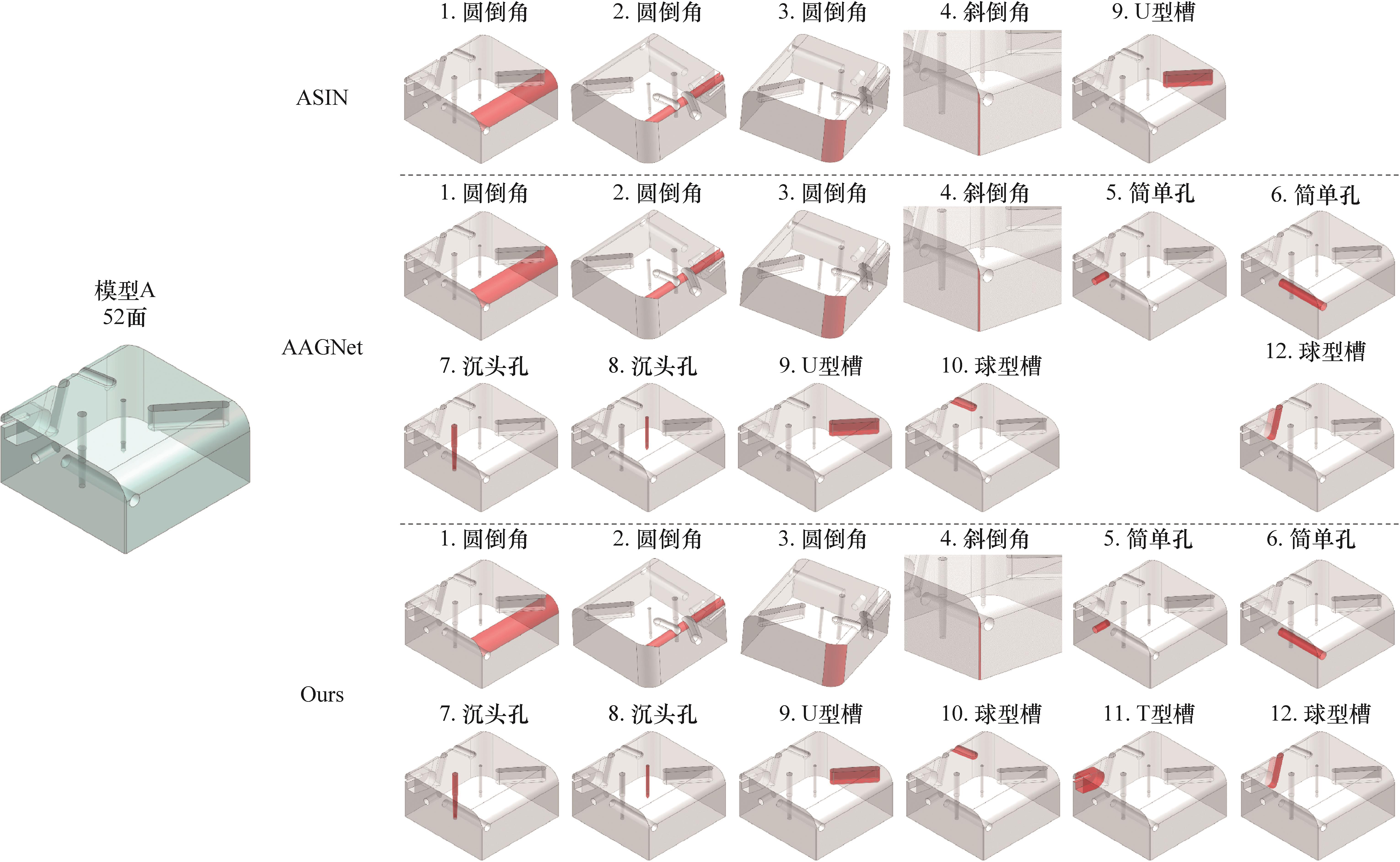
图5 模型A可视化对比结果
Fig.5 Comparative case study on model A
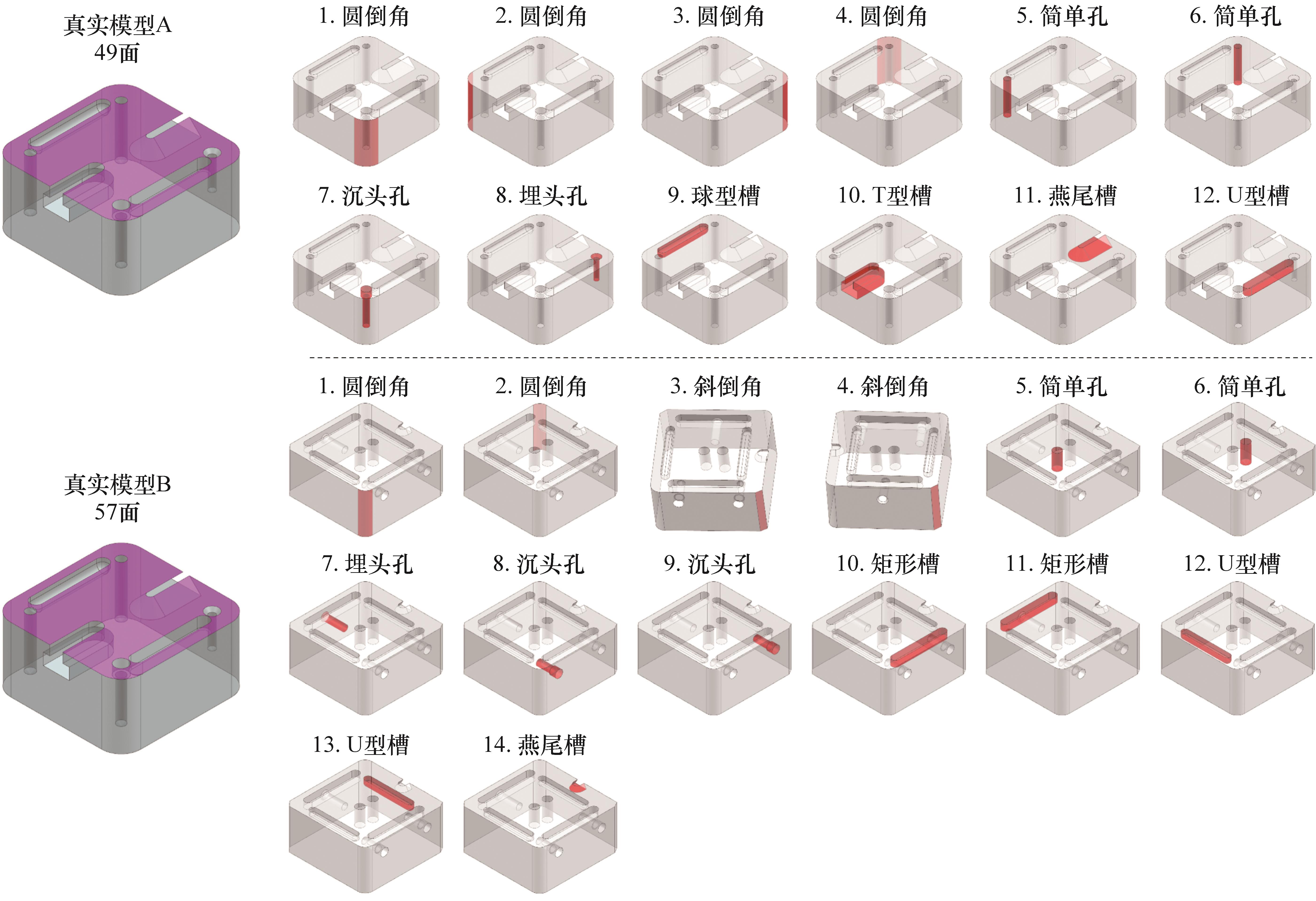
图6 真实模型的加工特征识别结果
Fig.6 Results of machining feature recognition in real-world model
| [1] | 边培莹. 机械CAD/CAM原理及应用[M]. 北京: 机械工业出版社, 2020. |
| [2] | 王秋明, 高慧颖, 刘科成. 基于过程方法的现代集成制造模式下质量管理系统模型[J]. 中国科学院研究生院学报, 2012, 29(5): 686-692. DOI: 10.7523/j.issn.2095-6134.2012.5.016 . |
| [3] | Shi Y, Zhang Y C, Xia K S, et al. A critical review of feature recognition techniques[J]. Computer-Aided Design and Applications, 2020, 17(5): 861-899. DOI: 10.14733/cadaps.2020.861-899 . |
| [4] | Zhang H, Zhang S S, Zhang Y J, et al. Machining feature recognition based on a novel multi-task deep learning network[J]. Robotics and Computer-Integrated Manufacturing, 2022, 77: 102369. DOI: 10.1016/j.rcim.2022.102369 . |
| [5] | 王泽隆, 徐向辉, 张雷. 基于仿真SAR图像深度迁移学习的自动目标识别[J]. 中国科学院大学学报, 2020, 37(4): 516-524. DOI: 10.7523/j.issn.2095-6134.2020.04.011 . |
| [6] | 孟曦婷, 计璐艳, 赵永超, 等. 基于深度学习的多尺度导弹发射井目标检测[J]. 中国科学院大学学报, 2021, 38(6): 800-808. DOI: 10.7523/j.issn.2095-6134.2021.06.010 . |
| [7] | Zhang Y, Zhang Y S, He K W, et al. Intelligent feature recognition for STEP-NC-compliant manufacturing based on artificial bee colony algorithm and back propagation neural network[J]. Journal of Manufacturing Systems, 2022, 62: 792-799. DOI: 10.1016/j.jmsy.2021.01.018 . |
| [8] | Colligan A R, Robinson T T, Nolan D C, et al. Hierarchical CADNet: learning from B-reps for machining feature recognition[J]. Computer-Aided Design, 2022, 147: 103226. DOI: 10.1016/j.cad.2022.103226 . |
| [9] | Shi P Z, Qi Q F, Qin Y C, et al. Intersecting machining feature localization and recognition via single shot multibox detector[J]. IEEE Transactions on Industrial Informatics, 2021, 17(5): 3292-3302. DOI: 10.1109/TII.2020.3030620 . |
| [10] | Shi P Z, Qi Q F, Qin Y C, et al. Highly interacting machining feature recognition via small sample learning[J]. Robotics and Computer-Integrated Manufacturing, 2022, 73: 102260. DOI: 10.1016/j.rcim.2021 . |
| [11] | Zhang Z B, Jaiswal P, Rai R. FeatureNet: machining feature recognition based on 3D convolution neural network[J]. Computer-Aided Design, 2018, 101: 12-22. DOI: 10.1016/j.cad.2018.03.006 . |
| [12] | Shi Y, Zhang Y C, Harik R. Manufacturing feature recognition with a 2D convolutional neural network[J]. CIRP Journal of Manufacturing Science and Technology, 2020, 30: 36-57. DOI: 10.1016/j.cirpj.2020.04.001 . |
| [13] | Wu H J, Lei R S, Peng Y B, et al. AAGNet: a graph neural network towards multi-task machining feature recognition[J]. Robotics and Computer-Integrated Manufacturing, 2024, 86: 102661. DOI: 10.1016/j.rcim.2023.102661 . |
| [14] | Wu X Y, Lao Y X, Jiang L, et al. Point transformer V2: grouped vector attention and partition-based pooling[EB/OL]. arXiv 2022: 2210.05666.(2022-10-11)[2024-04-28]. . |
| [15] | Zhao H S, Jiang L, Jia J Y, et al. Point transformer[C]//2021 IEEE/CVF International Conference on Computer Vision (ICCV). Montreal, QC, Canada. IEEE, 2021: 16239-16248. DOI: 10.1109/ICCV48922.2021.01595 . |
| [16] | Wu X Y, Jiang L, Wang P S, et al. Point transformer V3: simpler, faster, stronger[EB/OL]. arXiv 2023: 2312.10035. (2023-12-15)[2024-04-28]. . |
| [17] | Ji Q, Marefat M M. Bayesian approach for extracting and identifying features[J]. Computer-Aided Design, 1995, 27(6): 435-454. DOI: 10.1016/0010-4485(95)00017-L . |
| [18] | Wang Q M, Yu X H. Ontology based automatic feature recognition framework[J]. Computers in Industry, 2014, 65(7): 1041-1052. DOI: 10.1016/j.compind.2014.04.004 . |
| [19] | Zhang Y Z, Luo X F, Zhang B Y, et al. Semantic approach to the automatic recognition of machining features[J]. The International Journal of Advanced Manufacturing Technology, 2017, 89(1): 417-437. DOI: 10.1007/s00170-016-9056-8 . |
| [20] | Mandorli F, Borgo S, Wiejak P. From form features to semantic features in existing MCAD: an ontological approach[J]. Advanced Engineering Informatics, 2020, 44: 101088. DOI: 10.1016/j.aei.2020.101088 . |
| [21] | Trika S N, Kashyap R L. Geometric reasoning for extraction of manufacturing features in iso-oriented polyhedrons[J]. IEEE Transactions on Pattern Analysis and Machine Intelligence, 1994, 16(11): 1087-1100. DOI: 10.1109/34.334388 . |
| [22] | Li Y G, Ding Y F, Mou W P, et al. Feature recognition technology for aircraft structural parts based on a holistic attribute adjacency graph[J]. Proceedings of the Institution of Mechanical Engineers, Part B: Journal of Engineering Manufacture, 2010, 224(2): 271-278. DOI: 10.1243/09544054jem1634 . |
| [23] | 刘云华, 陈立平, 钟毅芳, 等. 基于痕迹的特征模型解释技术研究[J]. 计算机学报, 2000, 23(9): 960-965. DOI: 10.3321/j.issn:0254-4164.2000.09.013 . |
| [24] | Li Z, Lin J, Zhou D C, et al. Local symmetry based hint extraction of B-rep model for machining feature recognition[C]//ASME 2018 International Design Engineering Technical Conferences and Computers and Information in Engineering Conference, August 26–29, 2018, Quebec City, Quebec, Canada. 2018 DOI: 10.1115/DETC2018-85509 . |
| [25] | Kim B C, Mun D. Stepwise volume decomposition for the modification of B-rep models[J]. The International Journal of Advanced Manufacturing Technology, 2014, 75(9): 1393-1403. DOI: 10.1007/s00170-014-6210-z . |
| [26] | Kataraki P S, Abu Mansor M S. Auto-recognition and generation of material removal volume for regular form surface and its volumetric features using volume decomposition method[J]. The International Journal of Advanced Manufacturing Technology, 2017, 90(5): 1479-1506. DOI: 10.1007/s00170-016-9394-6 . |
| [27] | Rameshbabu V, Shunmugam M S. Hybrid feature recognition method for setup planning from STEP AP-203[J]. Robotics and Computer-Integrated Manufacturing, 2009, 25(2): 393-408. DOI: 10.1016/j.rcim.2007.09.014 . |
| [28] | Guo L, Zhou M, Lu Y Q, et al. A hybrid 3D feature recognition method based on rule and graph[J]. International Journal of Computer Integrated Manufacturing, 2021, 34(3): 257-281. DOI: 10.1080/0951192x.2020.1858507 . |
| [29] | Cao W J, Robinson T, Hua Y, et al. Graph representation of 3D CAD models for machining feature recognition with deep learning[C]//ASME 2020 International Design Engineering Technical Conferences and Computers and Information in Engineering Conference, August 17–19, 2020, Virtual, Online. 2020 DOI: 10.1115/DETC2020-22355 . |
| [30] | Jian C F, Li M, Qiu K Y, et al. An improved NBA-based STEP design intention feature recognition[J]. Future Generation Computer Systems, 2018, 88: 357-362. DOI: 10.1016/j.future.2018.05.033 . |
| [31] | Yeo C, Kim B C, Cheon S, et al. Machining feature recognition based on deep neural networks to support tight integration with 3D CAD systems[J]. Scientific Reports, 2021, 11(1): 22147. DOI: 10.1038/s41598-021-01313-3 . |
| [32] | 石叶楠, 郑国磊. 三种用于加工特征识别的神经网络方法综述[J]. 航空学报, 2019, 40(9): 022840. DOI: 10.7527/S1000-6893.2019.22840 . |
| [33] | Yao X H, Wang D, Yu T, et al. A machining feature recognition approach based on hierarchical neural network for multi-feature point cloud models[J]. Journal of Intelligent Manufacturing, 2023, 34(6): 2599-2610. DOI: 10.1007/s10845-022-01939-8 . |
| [34] | Qi C R, Yi L, Su H, et al. PointNet++: deep hierarchical feature learning on point sets in a metric space[EB/OL]. arXiv 2017: 1706.02413.(2017-06-07)[2024-04-28]. . |
| [35] | Charles R Q, Hao S, Mo K C, et al. PointNet: deep learning on point sets for 3D classification and segmentation[C]//2017 IEEE Conference on Computer Vision and Pattern Recognition (CVPR). Honolulu, HI, USA. IEEE, 2017: 77-85. DOI: 10.1109/CVPR.2017.16 . |
| [36] | Vaswani A, Shazeer N, Parmar N, et al. Attention is all you need[EB/OL]. arXiv 2017: 1706.03762. (2017-06-12)[2024-04-28]. . |
| [37] | Kingma D P, Ba J. Adam: a method for stochastic optimization[EB/OL]. arXiv 2014: 1412.6980.(2014-12-22)[2024-04-28]. . |
| [38] | Wang Y, Sun Y B, Liu Z W, et al. Dynamic graph CNN for learning on point clouds[J]. ACM Transactions on Graphics, 2019, 38(5): 146. DOI: 10.1145/3326362 . |
| [39] | Graham B, Engelcke M, van der Maaten L. 3D semantic segmentation with submanifold sparse convolutional networks[C]//2018 IEEE/CVF Conference on Computer Vision and Pattern Recognition. Salt Lake City, UT, USA. IEEE, 2018: 9224-9232. DOI: 10.1109/CVPR.2018.00961 . |
| [1] | 范涛, 詹旭. 基于融合特征MGCC和CNN-SE-BiGRU的声纹识别[J]. 中国科学院大学学报, 2025, 42(6): 832-842. |
| [2] | 朱思键, 齐向阳, 范怀涛. 基于双分支特征融合卷积神经网络的高分辨距离像船只目标识别[J]. 中国科学院大学学报, 2025, 42(6): 823-831. |
| [3] | 周庆泽, 郭擎. 多重残差网络的多光谱遥感图像锐化方法[J]. 中国科学院大学学报, 2025, 42(4): 565-575. |
| [4] | 王艺璇, 张怀, 石耀霖, 程术. 基于LSTM神经网络的南加州中期地震预测[J]. 中国科学院大学学报, 2025, 42(2): 199-208. |
| [5] | 扈崟汉, 郭田德, 韩丛英. 带有谱解耦正则的交叉熵损失的解[J]. 中国科学院大学学报, 2025, 42(2): 268-275. |
| [6] | 汪展鹏, 王丽瑾. 一类随机Lotka-Volterra系统参数的神经网络学习[J]. 中国科学院大学学报, 2025, 42(1): 20-25. |
| [7] | 袁鸣, 赵彤. 基于自监督异质图神经网络的图分类框架[J]. 中国科学院大学学报, 2024, 41(6): 830-841. |
| [8] | 郭素婕, 郭崇滨. 一种基于点云配准的空间非合作目标相对位姿估计算法[J]. 中国科学院大学学报, 2024, 41(5): 677-686. |
| [9] | 黄玉林, 梁磊, 李卫军, 习晓环. 基于多尺度特征和注意力机制的深度学习点云压缩[J]. 中国科学院大学学报, 2024, 41(5): 687-694. |
| [10] | 李雪源, 韩丛英. Actor-critic框架下的二次指派问题求解方法[J]. 中国科学院大学学报, 2024, 41(2): 275-284. |
| [11] | 潘超, 李凉海, 曹海翊, 赵一鸣, 袁逸飞, 韩晓爽. 基于密度与局部统计的单光子点云去噪方法[J]. 中国科学院大学学报, 2024, 41(2): 268-274. |
| [12] | 罗中凯, 张立波. 学习路径规划方法[J]. 中国科学院大学学报, 2024, 41(1): 11-27. |
| [13] | 李元, 张栖, 朱建明, 焦建彬. 基于多层次深度模型的社交网络核心谣言传播节点识别[J]. 中国科学院大学学报, 2024, 41(1): 136-144. |
| [14] | 董文豪, 张怀. 基于迁移学习的岩屑岩性识别[J]. 中国科学院大学学报, 2023, 40(6): 743-750. |
| [15] | 李晓宇, 周梅, 王金虎, 姚强强. 基于点密度与卡尔曼滤波的路面标识线提取方法[J]. 中国科学院大学学报, 2023, 40(6): 800-809. |
| 阅读次数 | ||||||
|
全文 |
|
|||||
|
摘要 |
|
|||||


