Journal of University of Chinese Academy of Sciences ›› 2026, Vol. 43 ›› Issue (3): 362-373.DOI: 10.7523/j.ucas.2024.038
• Environmental Science & Geography • Previous Articles Next Articles
Yanlin LI1,2, He LI1( )
)
Received:2023-07-03
Accepted:2024-05-06
Online:2026-05-15
Contact:
He LI
CLC Number:
Yanlin LI, He LI. Evolution of distribution and influencing factors of wood processing enterprises under the background of natural forest protection: a case study of Northeast China[J]. Journal of University of Chinese Academy of Sciences, 2026, 43(3): 362-373.
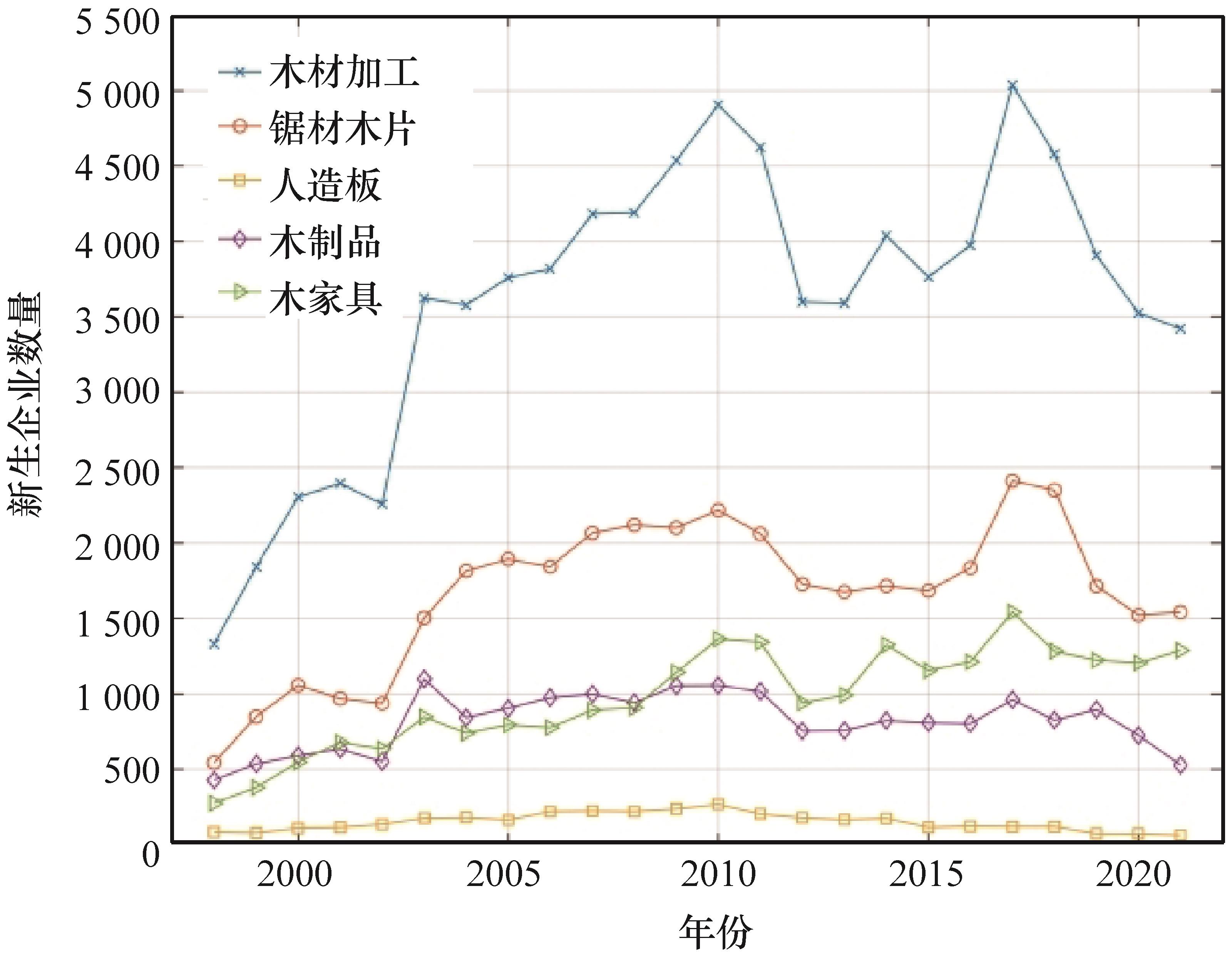
Fig.1 Changes in quantity of new wood processing firms in Northeast China (1998-2020)
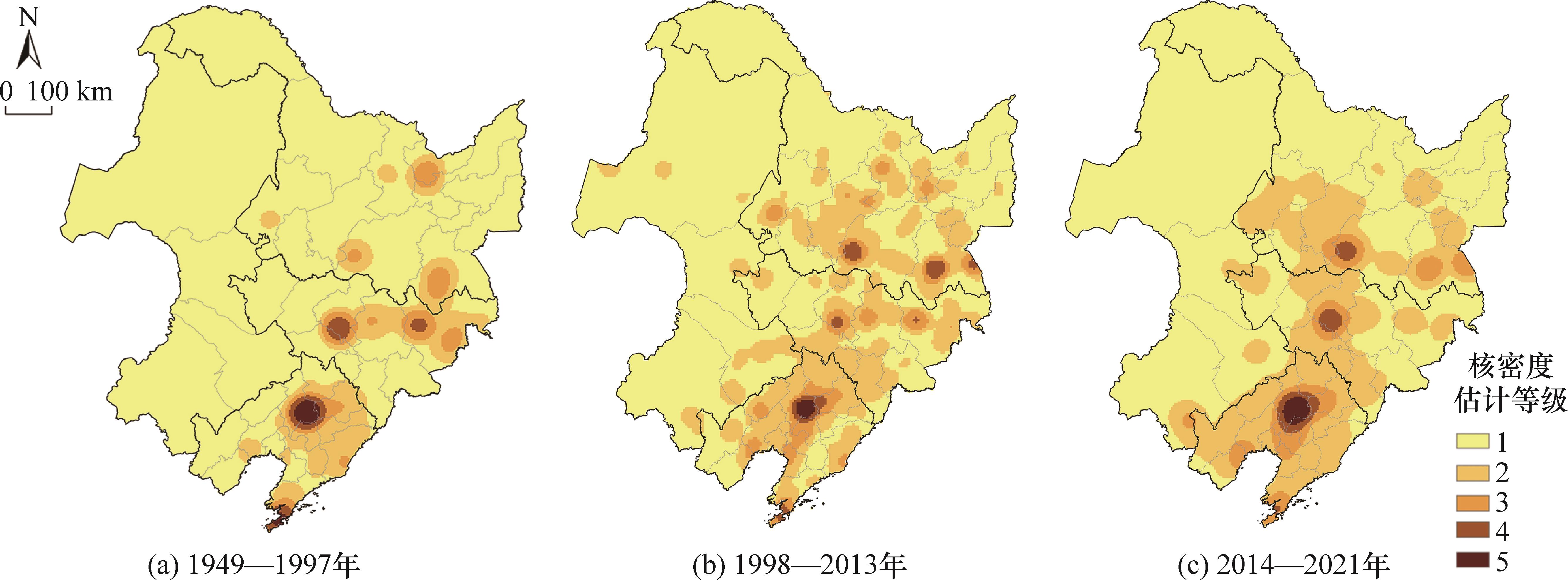
Fig.2 Kernel density estimation for wood processing firms in different periods

Fig.3 Kernel density estimation for different types of wood processing firms
| 维度 | 自变量 | 计算公式 |
|---|---|---|
| 资源要素 | 土地成本 | ln土地价格 |
| 木材资源丰富度 | 林地面积占比 | |
| 劳动力成本 | ln职工平均工资 | |
| 区位条件 | 口岸接近程度 | 1/到重要口岸的最短距离 |
| 运输条件 | 铁路网密度 | |
| 集聚经济 | 产业基础 | (上一年末)企业集聚度 |
| 知识溢出 | ln(木材加工企业申请的)专利授权数量 | |
| 市场需求 | 基础设施建设 | ln固定资产投资额 |
| 房屋建筑与装饰 | ln商品房销售面积 | |
| 日用消费 | ln人口数量 | |
| 政策调控 | 市场化程度 | 个体、私营部门职工数占单位从业人员总数比重 |
| 开发区政策 | 是否有以木材加工为主导产业的开发区 | |
| 天保工程实施强度 | 林业经济密度(单位林地面积林业产值)* | |
| 其他 | 区域面积 | ln行政区域土地面积 |
Table 1 Explanatory variables and definitions of location choice of wood-working firms
| 维度 | 自变量 | 计算公式 |
|---|---|---|
| 资源要素 | 土地成本 | ln土地价格 |
| 木材资源丰富度 | 林地面积占比 | |
| 劳动力成本 | ln职工平均工资 | |
| 区位条件 | 口岸接近程度 | 1/到重要口岸的最短距离 |
| 运输条件 | 铁路网密度 | |
| 集聚经济 | 产业基础 | (上一年末)企业集聚度 |
| 知识溢出 | ln(木材加工企业申请的)专利授权数量 | |
| 市场需求 | 基础设施建设 | ln固定资产投资额 |
| 房屋建筑与装饰 | ln商品房销售面积 | |
| 日用消费 | ln人口数量 | |
| 政策调控 | 市场化程度 | 个体、私营部门职工数占单位从业人员总数比重 |
| 开发区政策 | 是否有以木材加工为主导产业的开发区 | |
| 天保工程实施强度 | 林业经济密度(单位林地面积林业产值)* | |
| 其他 | 区域面积 | ln行政区域土地面积 |
| 维度 | 自变量 | 模型1:1995年 | 模型2:2003年 | 模型3:2008年 | 模型4:2013年 | 模型5:2020年 |
|---|---|---|---|---|---|---|
| 资源要素 | 土地成本 | |||||
| 木材资源丰富度 | 0.264* | 0.251* | -0.133* | |||
| 劳动力成本 | -0.157** | |||||
| 区位条件 | 口岸接近性 | 0.243*** | -0.133* | |||
| 运输条件 | 0.419*** | 0.354*** | ||||
| 集聚经济 | 产业基础 | 0.821*** | 0.692*** | 0.425*** | 0.327*** | 0.215* |
| 知识溢出 | 0.301** | |||||
| 市场需求 | 基础设施建设 | 0.273* | ||||
| 房屋建筑与装饰 | 0.785*** | |||||
| 日用消费 | 0.46*** | |||||
| 政策调控 | 市场化程度 | -0.229** | 0.228*** | 0.125* | ||
| 开发区政策 | ||||||
| 天保工程实施强度 | 0.152* | |||||
| 其他 | 区域面积 | 0.537*** | 0.301** |
Table 2 Regression results for the location choice models of wood processing firms
| 维度 | 自变量 | 模型1:1995年 | 模型2:2003年 | 模型3:2008年 | 模型4:2013年 | 模型5:2020年 |
|---|---|---|---|---|---|---|
| 资源要素 | 土地成本 | |||||
| 木材资源丰富度 | 0.264* | 0.251* | -0.133* | |||
| 劳动力成本 | -0.157** | |||||
| 区位条件 | 口岸接近性 | 0.243*** | -0.133* | |||
| 运输条件 | 0.419*** | 0.354*** | ||||
| 集聚经济 | 产业基础 | 0.821*** | 0.692*** | 0.425*** | 0.327*** | 0.215* |
| 知识溢出 | 0.301** | |||||
| 市场需求 | 基础设施建设 | 0.273* | ||||
| 房屋建筑与装饰 | 0.785*** | |||||
| 日用消费 | 0.46*** | |||||
| 政策调控 | 市场化程度 | -0.229** | 0.228*** | 0.125* | ||
| 开发区政策 | ||||||
| 天保工程实施强度 | 0.152* | |||||
| 其他 | 区域面积 | 0.537*** | 0.301** |
| 维度 | 自变量 | 模型6:锯材木片业 | 模型7:人造板业 | 模型8:木制品业 | 模型9:木家具业 |
|---|---|---|---|---|---|
| 资源要素 | 土地成本 | 0.504** | |||
| 木材资源丰富度 | -0.322*** | ||||
| 劳动力成本 | -0.286* | -0.743** | |||
| 区位条件 | 口岸接近性 | ||||
| 运输条件 | -0.392** | ||||
| 集聚经济 | 产业基础 | 0.414** | 0.416* | 0.18*** | |
| 知识溢出 | 0.307*** | 0.308*** | |||
| 市场需求 | 基础设施建设 | ||||
| 房屋建筑与装饰 | 0.874*** | 1.032*** | 0.422* | ||
| 政策调控 | 市场化程度 | 0.245*** | 0.471** | -0.138** | |
| 开发区政策 | |||||
| 天保工程实施强度 | |||||
| 其他 | 区域面积 | 0.614** |
Table 3 Regression results for the location choice models of different kinds of wood processing firms
| 维度 | 自变量 | 模型6:锯材木片业 | 模型7:人造板业 | 模型8:木制品业 | 模型9:木家具业 |
|---|---|---|---|---|---|
| 资源要素 | 土地成本 | 0.504** | |||
| 木材资源丰富度 | -0.322*** | ||||
| 劳动力成本 | -0.286* | -0.743** | |||
| 区位条件 | 口岸接近性 | ||||
| 运输条件 | -0.392** | ||||
| 集聚经济 | 产业基础 | 0.414** | 0.416* | 0.18*** | |
| 知识溢出 | 0.307*** | 0.308*** | |||
| 市场需求 | 基础设施建设 | ||||
| 房屋建筑与装饰 | 0.874*** | 1.032*** | 0.422* | ||
| 政策调控 | 市场化程度 | 0.245*** | 0.471** | -0.138** | |
| 开发区政策 | |||||
| 天保工程实施强度 | |||||
| 其他 | 区域面积 | 0.614** |
| [1] | Walter I, Ugelow J L. Environmental policies in developing countries[J]. Ambio, 1979: 102-109. |
| [2] | 戴其文, 杨靖云, 张晓奇, 等. 污染企业/产业转移的特征、模式与动力机制[J].地理研究, 2020, 39(7): 1511-1533. DOI: 10.11821/dlyj020190637 . |
| [3] | Cai H B, Chen Y Y, Gong Q. Polluting thy neighbor: Unintended consequences of China’s pollution reduction mandates[J]. Journal of Environmental Economics and Management, 2016, 76: 86-104. DOI: 10.1016/j.jeem.2015.01.002 . |
| [4] | 王亚平, 曹欣欣, 程钰, 等. 山东省污染密集型产业时空演变特征及影响机理[J]. 经济地理, 2019, 39(1):130-139. DOI: 10.15957/j.cnki.jjdl.2019.01.016 . |
| [5] | 张小筠, 刘戒骄. 新中国70年环境规制政策变迁与取向观察[J]. 改革, 2019(10): 16-25. |
| [6] | 邱金龙, 潘爱玲, 张国珍. 正式环境规制、非正式环境规制与重污染企业绿色并购[J]. 广东社会科学, 2018(2): 51-59. DOI: 10. 3969/j. issn. 1000-114X. 2018. 02. 006 . |
| [7] | 彭星, 李斌. 不同类型环境规制下中国工业绿色转型问题研究[J]. 财经研究, 2016, 42(7): 134-144. DOI: 10.16538/j.cnki.jfe.2016.07.012 . |
| [8] | Shi M Y, Qi J G, Yin R S. Has China’s natural forest protection program protected forests?: Heilong jiang’s experience[J]. Forests, 2016, 7(10): 218. DOI: 10.3390/f7100218 . |
| [9] | 曲福田, 孙若梅. 生态经济与和谐社会[M]. 北京:社会科学文献出版社, 2010. |
| [10] | 唐见, 曹慧群, 陈进. 生态保护工程和气候变化对长江源区植被变化的影响量化[J].地理学报, 2019, 74(1): 76-86. DOI: 10.11821/dlxb201901006 . |
| [11] | 陈蓬. 国外天然林保护概况及我国天然林保护的进展与对策[J]. 北京林业大学学报(社会科学版), 2004, 3(2): 50-54. DOI: 10. 3969/j. issn. 1671-6116. 2004. 02. 012 . |
| [12] | Murphy J T. Global production networks, relational proximity, and the sociospatial dynamics of market internationalization in Bolivia’s wood products sector[J]. Annals of the Association of American Geographers, 2012, 102(1): 208-233. DOI: 10. 1080/00045608. 2011. 596384 . |
| [13] | Jadin I, Meyfroidt P, Lambin E F. Forest protection and economic development by offshoring wood extraction: Bhutan’s clean development path[J]. Regional Environmental Change, 2016, 16(2): 401-415. DOI: 10.1007/s10113-014-0749-y . |
| [14] | Luhas J, Mikkilä M, Uusitalo V, et al. Product diversification in sustainability transition: the forest-based bioeconomy in Finland[J]. Sustainability, 2019, 11(12): 3293. DOI: 10.3390/su11123293 . |
| [15] | 胡琴心, 任月, 朱洪革. 全面停伐政策降低国有林区居民的生活满意度了吗?: 基于多元有序Logit模型回归[J]. 林业经济, 2018, 40(5): 33-38. DOI: 10.13843/j.cnki.lyjj.2018.05.006 . |
| [16] | Aguilar F X. Factors influencing the spatial distribution of natural resource-based industries: the softwood lumber industry in the United States South [D]. Louisiana State University Libraries, Doctor of Philosophy (PhD), 2007. DOI: 10. 31390/ gradschool_dissertations. 1645 . |
| [17] | Brandeis C, Hodges D G. Sawmill industry in Tennessee: assessing location pattern changes and their effects on sawlog procurement distribution[J]. Forest Science, 2023, 69(1): e11-e20. DOI: 10.5849/fs-2016-124 . |
| [18] | Zainul Armir N A, Zakaria S, Begum R A, et al. Factors affecting industrial localization of timber mills in Peninsular Malaysia by econometric and spatial analysis[J]. Environment, Development and Sustainability, 2022, 24(6): 7833-7850. DOI: 10.1007/s10668-021-01760-y . |
| [19] | Chen Z H, Zhu H G, Zhao W C, et al. Spatial agglomeration of China’s forest products manufacturing industry: measurement, characteristics and determinants[J]. Forests, 2021, 12(8): 1006. DOI: 10.3390/f12081006 . |
| [20] | 杨超, 程宝栋, 谢屹, 等. 中国木材产业发展的阶段识别及时空分异特征[J]. 自然资源学报, 2017, 32(2):235-244. DOI: 10.11849/zrzyxb.20160227 . |
| [21] | 杨超, 宋维明, 程宝栋. 中国木材加工业转移与集聚研究:产业集聚过度了吗?[J]. 林业经济, 2018, 40(3): 16-21, 41. DOI: 10. 13843/j. cnki. lyjj. 2018. 03. 005 . |
| [22] | 李小平. 中国木材加工产业集聚的空间格局演变及影响因素研究[D]. 北京: 北京林业大学, 2013. |
| [23] | 搜狐新闻. 东北地区累计为国家生产木材10亿多立方米[EB/OL].(2003-11-20) [2023-04-27]. . |
| [24] | 肖凡, 任建造, 伍敏冬, 等. 21世纪以来中国高新技术企业的时空分布和影响机制[J]. 经济地理, 2018, 38(2): 27-35. DOI: 10.15957/j.cnki.jjdl.2018.02.004 . |
| [25] | 展亚荣, 谷人旭. 中国数字创意上市挂牌企业空间格局及其影响因素[J].地理科学, 2022, 42(8): 1370-1380. DOI: 10.13249/j.cnki.sgs.2022.08.005 . |
| [26] | Aguilar F X, Vlosky R P. Spatial analysis of forests products manufacturer clusters in Louisiana[J]. Wood and fiber science, 2006: 121-131. |
| [27] | Hagadone T A, Grala R K. Business clusters in Mississippi’s forest products industry[J]. Forest Policy and Economics, 2012, 20: 16-24. DOI: 10.1016/j.forpol.2012.01.011 . |
| [28] | Kies U, Mrosek T, Schulte A. Spatial analysis of regional industrial clusters in the German forest sector[J]. International Forestry Review, 2009, 11(1): 38-51. DOI: 10.1505/ifor.11.1.38 . |
| [29] | Krugman P. History and industry location: the case of the manufacturing belt[J]. The American Economic Review, 1991, 81(2): 80-83. |
| [30] | Krugman P. Scale economies, product differentiation, and the pattern of trade[J]. The American Economic Review, 1980, 70(5): 950-959. |
| [31] | 迈克尔·波特. 国家竞争优势[M]. 李明轩, 邱如美,译. 北京: 华夏出版社, 2002. |
| [32] | Zhang Y L, Li H Q, McBroom M W, et al. A spatial analysis of the forestry industries in East Texas[J]. Annals of GIS, 2013, 19(3): 187-193. DOI: 10.1080/19475683.2013.806357 . |
| [33] | 周沂, 贺灿飞, 刘颖. 中国污染密集型产业地理分布研究[J].自然资源学报, 2015, 30(7): 1183-1196. DOI: 10.11849/zrzyxb.2015.07.011 . |
| [34] | 李蕴雄, 任永欢, 贺灿飞. 中国的地区企业进入与退出关联研究[J]. 地理科学进展, 2016, 35(3): 349-357. DOI: 10.18306/dlkxjz.2016.03.009 . |
| [35] | 赵勇, 白永秀. 知识溢出:一个文献综述[J]. 经济研究, 2009, 44(1): 144-156. |
| [36] | 艾学明. 建筑材料与构造[M]. 2版. 南京: 东南大学出版社, 2018. |
| [37] | 严如贺, 柯水发, 刘珉. 东北三省林业发展与老工业基地振兴关系分析[J]. 林业经济, 2016, 38(11): 16-21. DOI: 10.13843/j.cnki.lyjj.2016.11.003 . |
| [38] | 赵浚竹, 孙铁山, 李国平. 中国汽车制造业集聚与企业区位选择[J]. 地理学报, 2014, 69(6): 850-862. DOI: 10.11821/dlxb201406011 . |
| [39] | 宋飏, 王婷婷, 张瑜, 等. 东北三省企业空间格局演化与区位选择因素[J]. 地理科学, 2021,41(7): 1199-1209. DOI: 10.13249/j.cnki.sgs.2021.07.010 . |
| [40] | 姚予龙, 邵彬, 李泽红. “一带一路” 倡议下中俄林业合作格局与资源潜力研究[J]. 资源科学, 2018, 40(11): 2153-2167. DOI: 10.18402/resci.2018.11.02 . |
| [41] | 陶晨璐, 李凌超, 程宝栋. 中国木材加工业空间集聚水平实证研究[J]. 北京林业大学学报(社会科学版), 2017, 16(4): 61-68. DOI: 10. 13931/j. cnki. bjfuss. 2017032 . |
| [42] | 窦玉婷. 决战决胜四季度 大河木业年产5万立方米中密度秸秆板项目: 加快打造东北地区人造板新生力量[N]. 牡丹江日报, 2022-11-17. |
| [43] | Sasatani D, Zhang D W. The pattern of softwood sawmill closures in the US South: a survival analysis approach[J]. Forest Science, 2015, 61(4): 635-643. DOI: 10.5849/forsci.14-055 . |
| [44] | 张平宇. “振兴东北” 以来区域城镇化进展、问题及对策[J]. 中国科学院院刊, 2013, 28(1): 39-45, 38. DOI: 10.3969/j.issn.1000-3045.2013.01.004 . |
| [45] | 戚伟, 刘盛和, 金凤君. 东北三省人口流失的测算及演化格局研究[J]. 地理科学, 2017, 37(12): 1795-1804. DOI: 10.13249/j.cnki.sgs.2017.12.002 . |
| [46] | 李妍琳, 李鹤. 人口收缩背景下资源型城市住宅价格的差异化响应及影响因素[J]. 自然资源学报, 2023, 38(1): 157-170. DOI: 10. 31497/zrzyxb. 20230110 . |
| [47] | 白雪松. 辽宁省木材加工企业合理布局的研究[D]. 南京: 南京林业大学, 2006. |
| [48] | 孙平军, 王柯文. 中国东北三省城市收缩的识别及其类型划分[J]. 地理学报, 2021, 76(6): 1366-1379. DOI: 10.11821/dlxb202106004 . |
| [49] | 秦志琴, 倪云松, 姜晓丽, 等. 资源型地区工矿企业空间集聚与区域转型: 以山西省为例[J]. 自然资源学报, 2021, 36(4): 948-964. DOI: 10. 31497/zrzyxb. 20210411 . |
| Viewed | ||||||
|
Full text |
|
|||||
|
Abstract |
|
|||||
Copyright © Journal of University of Chinese Academy of Sciences
Support by Beijing Magtech Co.ltd support@magtech.com.cn

