Journal of University of Chinese Academy of Sciences ›› 2026, Vol. 43 ›› Issue (5): 677-686.DOI: 10.7523/j.ucas.2025.017
• Electronics and Computer Science • Previous Articles Next Articles
Qi ZHANG, Yuan LI( ), Yanzhao ZHOU, Jianbin JIAO
Received:2024-11-14
Revised:2025-04-02
Online:2026-09-15
Contact:
Yuan LI
CLC Number:
Qi ZHANG, Yuan LI, Yanzhao ZHOU, Jianbin JIAO. Skeleton-based video anomaly detection with memory enhancement and diffusion model[J]. Journal of University of Chinese Academy of Sciences, 2026, 43(5): 677-686.
Add to citation manager EndNote|Ris|BibTeX
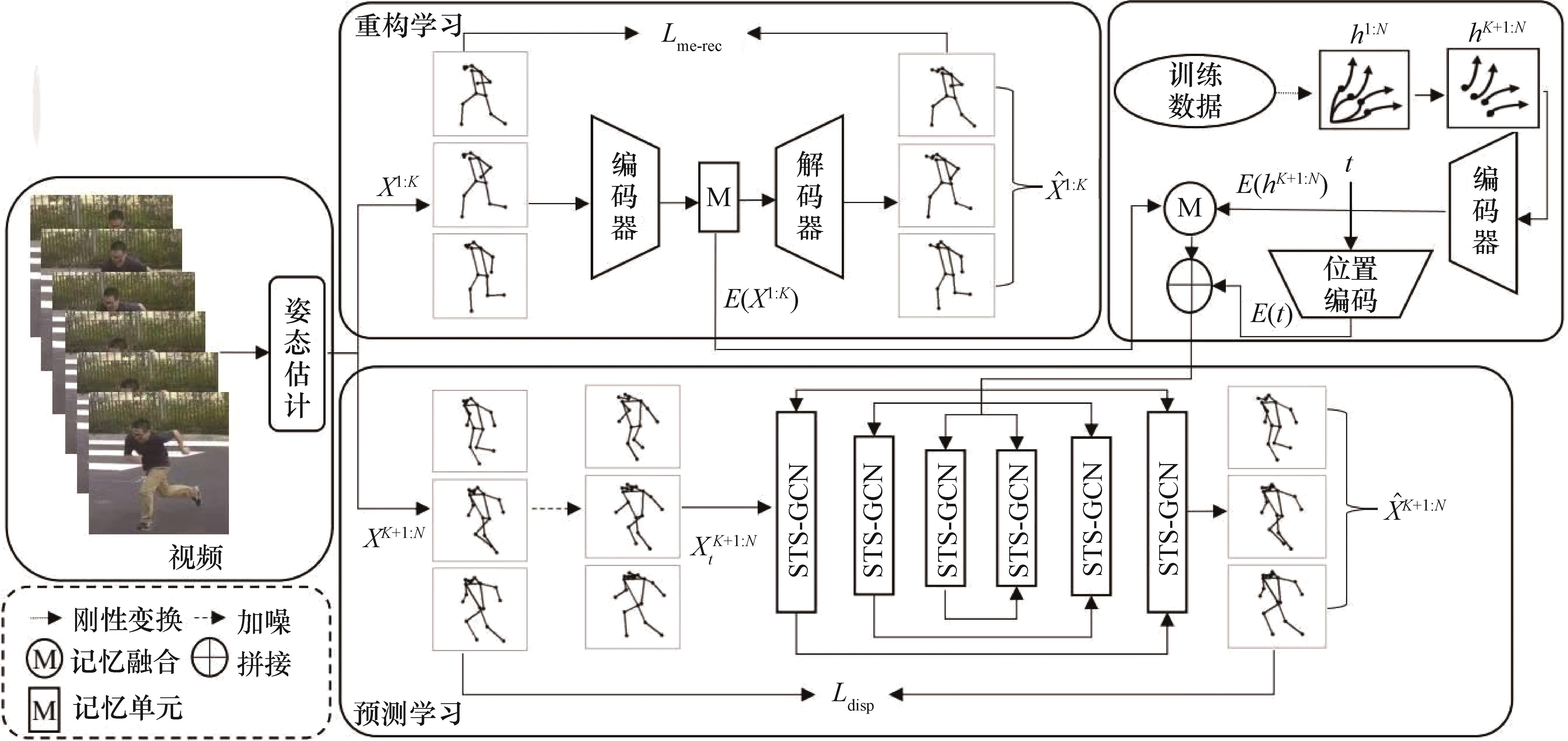
Fig.1 Overall framework of MEDM-SVAD
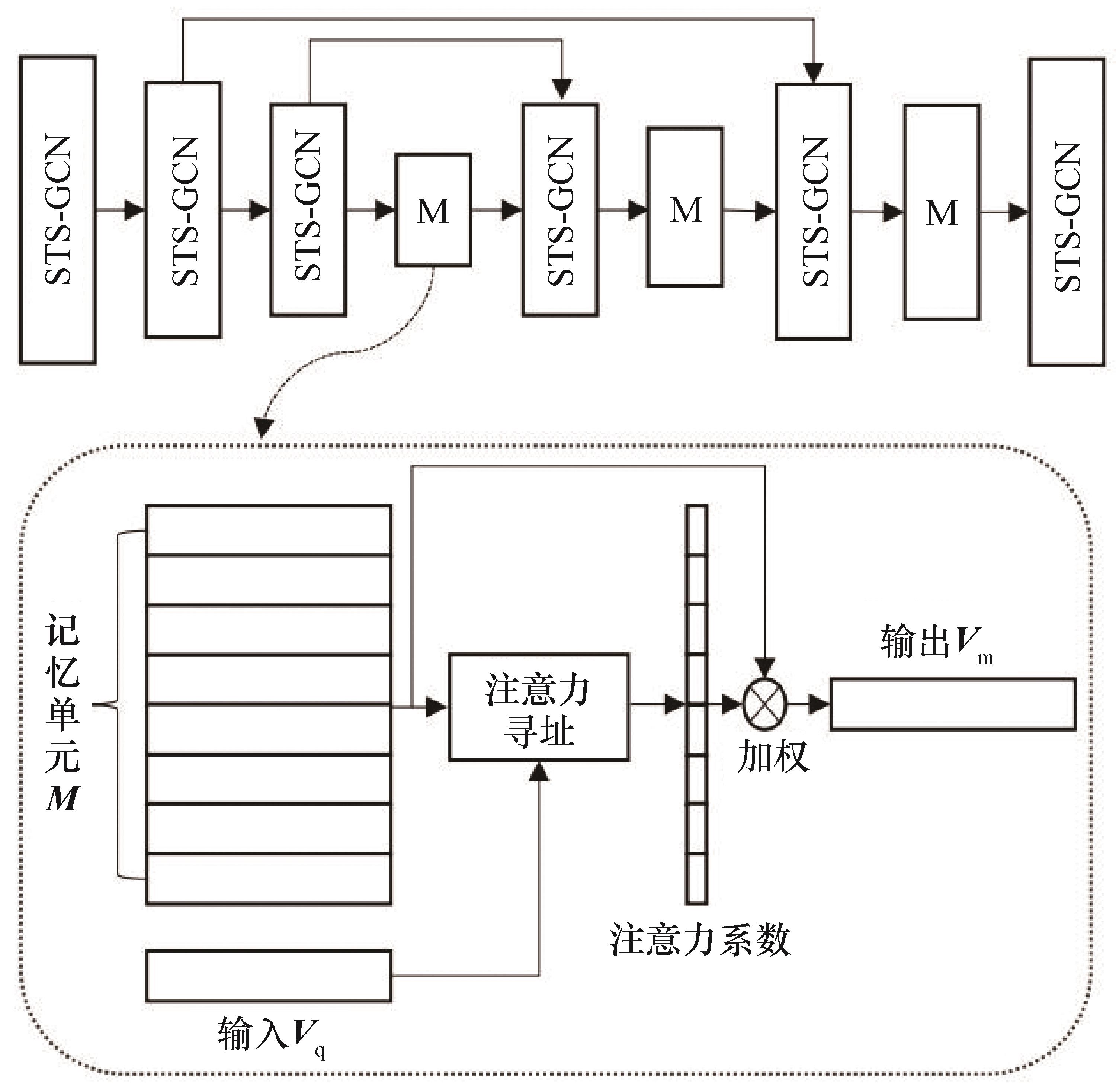
Fig.2 Architecture of reconstructed network
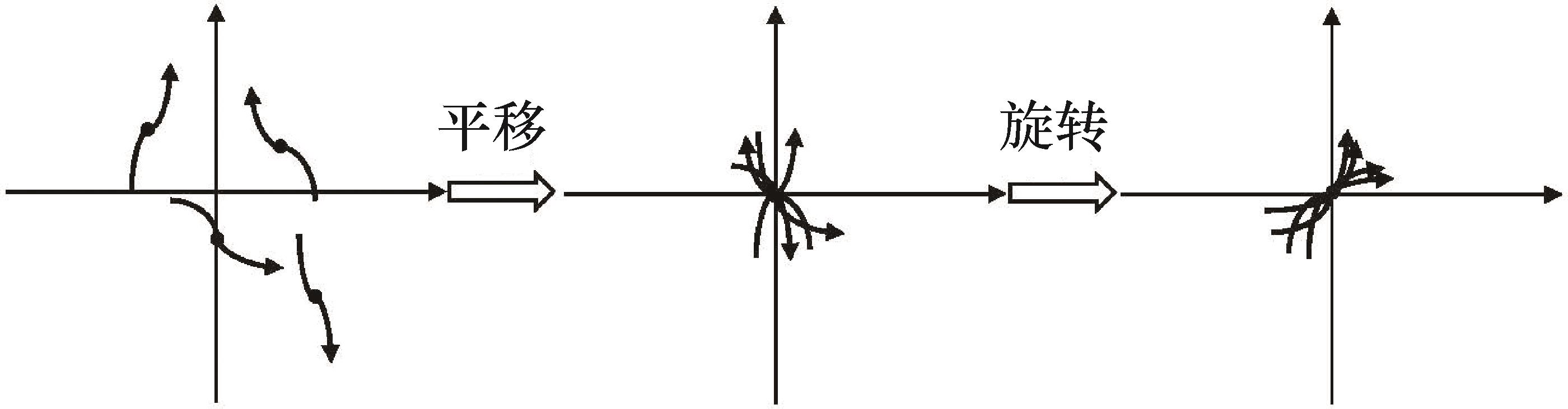
Fig.3 Illustration of rigid transformation
| 模型 | HR-STC | HR-Avenue | HR-UBnormal | |||||||||
|---|---|---|---|---|---|---|---|---|---|---|---|---|
| R-A | R | P | F | R-A | R | P | F | R-A | R | P | F | |
| MPED-RNN | 72.7 | 60.7 | 74.7 | 69.2 | 86.3 | 73.3 | 89.4 | 81.9 | 61.2 | 49.3 | 64.1 | 55.3 |
| MT-Prediction | 77.0 | — | — | — | 88.3 | — | — | — | — | — | — | — |
| Normal Graph | 76.5 | — | — | — | 87.3 | — | — | — | — | — | — | — |
| BiPOCO | 74.9 | 68.3 | 76.8 | 70.9 | 87.0 | 76.3 | 88.3 | 84.1 | 52.3 | 43.7 | 56.1 | 50.3 |
| COSKAD | 77.1 | 71.3 | 79.3 | 73.2 | 87.8 | 79.2 | 90.5 | 86.3 | 65.5 | 51.4 | 67.1 | 62.9 |
| MoCoDAD | 77.6 | 70.8 | 78.2 | 76.4 | 89.0 | 78.1 | 91.6 | 85.1 | 68.4 | 59.3 | 70.2 | 64.1 |
| MEDM-SVAD | 78.5 | 74.1 | 83.7 | 77.2 | 90.1 | 85.2 | 92.8 | 87.3 | 69.7 | 63.7 | 72.3 | 67.1 |
Table 1 Performance comparison on the HR-STC, HR-Avenue, and HR-UBnormal datasets
| 模型 | HR-STC | HR-Avenue | HR-UBnormal | |||||||||
|---|---|---|---|---|---|---|---|---|---|---|---|---|
| R-A | R | P | F | R-A | R | P | F | R-A | R | P | F | |
| MPED-RNN | 72.7 | 60.7 | 74.7 | 69.2 | 86.3 | 73.3 | 89.4 | 81.9 | 61.2 | 49.3 | 64.1 | 55.3 |
| MT-Prediction | 77.0 | — | — | — | 88.3 | — | — | — | — | — | — | — |
| Normal Graph | 76.5 | — | — | — | 87.3 | — | — | — | — | — | — | — |
| BiPOCO | 74.9 | 68.3 | 76.8 | 70.9 | 87.0 | 76.3 | 88.3 | 84.1 | 52.3 | 43.7 | 56.1 | 50.3 |
| COSKAD | 77.1 | 71.3 | 79.3 | 73.2 | 87.8 | 79.2 | 90.5 | 86.3 | 65.5 | 51.4 | 67.1 | 62.9 |
| MoCoDAD | 77.6 | 70.8 | 78.2 | 76.4 | 89.0 | 78.1 | 91.6 | 85.1 | 68.4 | 59.3 | 70.2 | 64.1 |
| MEDM-SVAD | 78.5 | 74.1 | 83.7 | 77.2 | 90.1 | 85.2 | 92.8 | 87.3 | 69.7 | 63.7 | 72.3 | 67.1 |
| 方法 | 重构网络 | 预测网络 | R-A | R | P | F | |||
|---|---|---|---|---|---|---|---|---|---|
| AM(w) | AM(o) | DM | AM | DM | |||||
| 方案1 | — | — | ✓ | — | ✓ | 77.1 | 63.1 | 78.9 | 69.2 |
| 方案2 | — | — | ✓ | ✓ | — | 78.1 | 67.3 | 80.3 | 71.3 |
| 方案3 | ✓ | — | — | — | ✓ | 77.9 | 71.9 | 81.1 | 73.8 |
| 方案4 | ✓ | — | — | ✓ | — | 78.5 | 74.1 | 83.7 | 77.2 |
| 方案5 | — | ✓ | — | — | ✓ | 77.5 | 70.3 | 79.7 | 70.6 |
| 方案6 | — | ✓ | — | ✓ | — | 78.4 | 71.9 | 82.2 | 75.3 |
Table 2 Ablation study of the memory module
| 方法 | 重构网络 | 预测网络 | R-A | R | P | F | |||
|---|---|---|---|---|---|---|---|---|---|
| AM(w) | AM(o) | DM | AM | DM | |||||
| 方案1 | — | — | ✓ | — | ✓ | 77.1 | 63.1 | 78.9 | 69.2 |
| 方案2 | — | — | ✓ | ✓ | — | 78.1 | 67.3 | 80.3 | 71.3 |
| 方案3 | ✓ | — | — | — | ✓ | 77.9 | 71.9 | 81.1 | 73.8 |
| 方案4 | ✓ | — | — | ✓ | — | 78.5 | 74.1 | 83.7 | 77.2 |
| 方案5 | — | ✓ | — | — | ✓ | 77.5 | 70.3 | 79.7 | 70.6 |
| 方案6 | — | ✓ | — | ✓ | — | 78.4 | 71.9 | 82.2 | 75.3 |
| 方法 | R-A | R | P | F |
|---|---|---|---|---|
| CVAE | 59.1 | 49.6 | 63.3 | 55.8 |
| MAE | 66.3 | 57.7 | 70.2 | 60.9 |
| GAN | 73.8 | 67.2 | 77.8 | 70.0 |
| Diffusion Model | 78.5 | 74.1 | 83.7 | 77.2 |
Table 3 Ablation study of the diffusion model
| 方法 | R-A | R | P | F |
|---|---|---|---|---|
| CVAE | 59.1 | 49.6 | 63.3 | 55.8 |
| MAE | 66.3 | 57.7 | 70.2 | 60.9 |
| GAN | 73.8 | 67.2 | 77.8 | 70.0 |
| Diffusion Model | 78.5 | 74.1 | 83.7 | 77.2 |
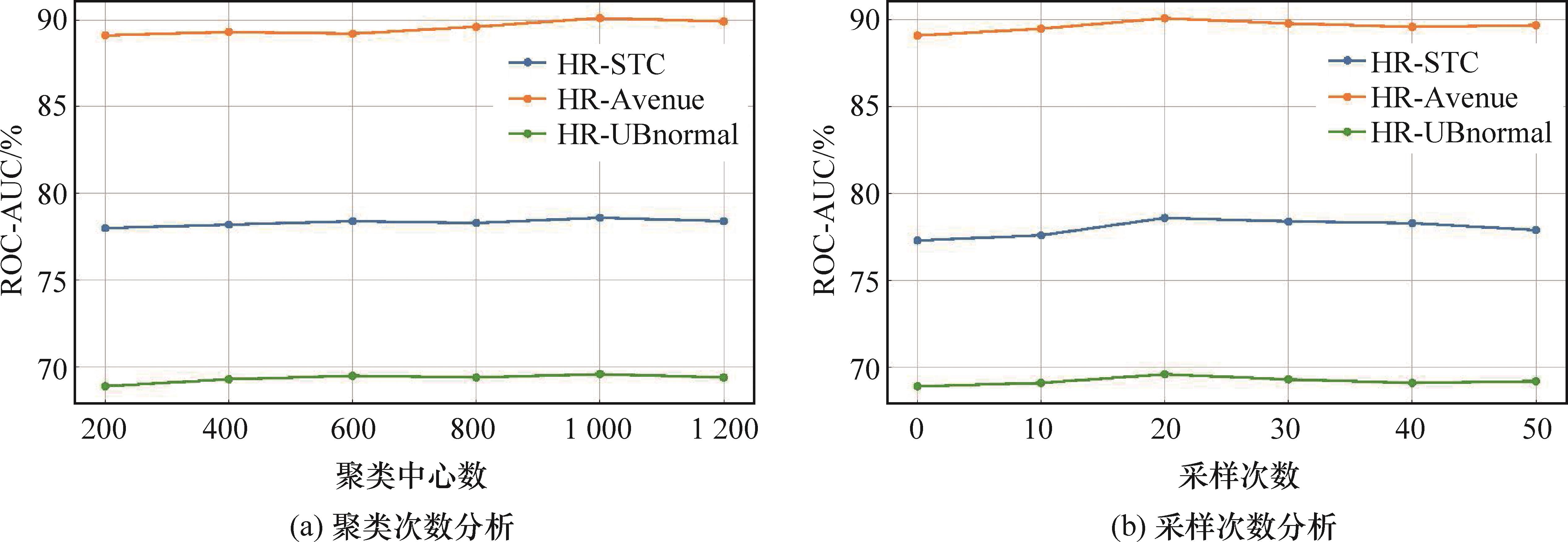
Fig.4 Hyperparameter analysis
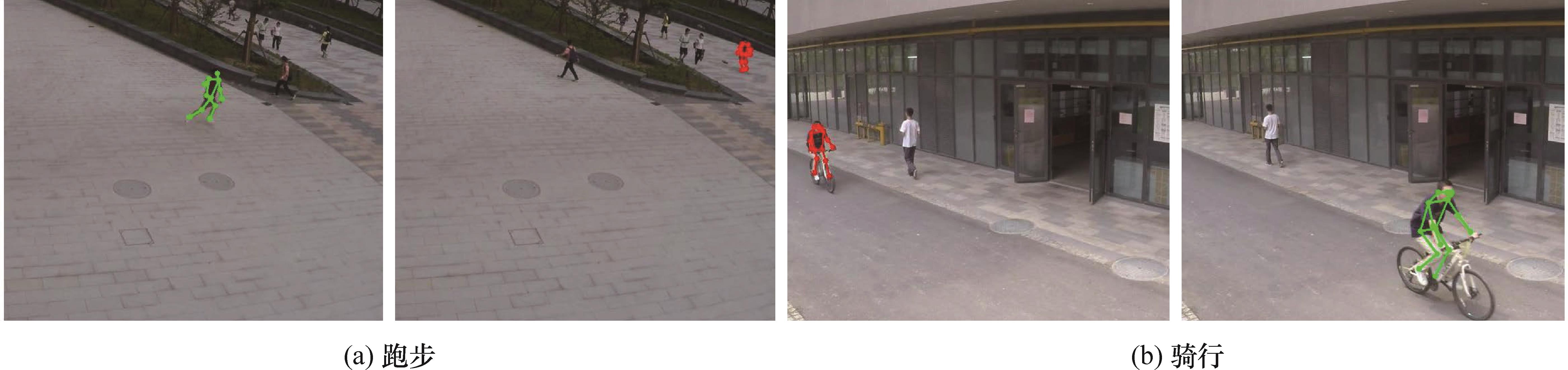
Fig.5 Visualization results of case analysis
| [1] | Sultani W, Chen C, Shah M. Real-world anomaly detection in surveillance videos[C]//2018 IEEE/CVF Conference on Computer Vision and Pattern Recognition(CVPR). June 18-23, 2018, Salt Lake City, UT, USA. IEEE, 2018: 6479-6488. DOI: 10.1109/CVPR.2018.00678 . |
| [2] | Hasan M, Choi J, Neumann J, et al. Learning temporal regularity in video sequences[C]//2016 IEEE Conference on Computer Vision and Pattern Recognition(CVPR). June 27-30, 2016. Las Vegas, NV, USA. IEEE, 2016: 733-742. DOI: 10.1109/CVPR.2016.86 . |
| [3] | Liu W, Luo W X, Lian D Z, et al. Future frame prediction for anomaly detection: a new baseline[C]//2018 IEEE/CVF Conference on Computer Vision and Pattern Recognition(CVPR). June 18-23, 2018, Salt Lake City, UT, USA. IEEE, 2018: 6536-6545. DOI: 10.1109/CVPR.2018.00684 . |
| [4] | Luo W X, Liu W, Gao S H. A revisit of sparse coding based anomaly detection in stacked RNN framework[C]//2017 IEEE International Conference on Computer Vision(ICCV). October 22-29, 2017, Venice, Italy. IEEE, 2017: 341-349. DOI: 10.1109/ICCV.2017.45 . |
| [5] | Chong Y S, Tay Y H. Abnormal event detection in videos using spatiotemporal autoencoder[C]//Advances in Neural Networks-ISNN 2017. Cham: Springer International Publishing, 2017: 189-196. DOI: 10.1007/978-3-319-59081-3_23 . |
| [6] | Xu D, Yan Y, Ricci E, et al. Detecting anomalous events in videos by learning deep representations of appearance and motion[J]. Computer Vision and Image Understanding, 2017, 156: 117-127. DOI: 10.1016/j.cviu.2016.10.010 . |
| [7] | Hinami R, Mei T, Satoh S. Joint detection and recounting of abnormal events by learning deep generic knowledge[C]//2017 IEEE International Conference on Computer Vision(ICCV). October 22-29, 2017, Venice, Italy. IEEE, 2017: 3639-3647. DOI: 10.1109/ICCV.2017.391 . |
| [8] | Coşar S, Donatiello G, Bogorny V, et al. Toward abnormal trajectory and event detection in video surveillance[J]. IEEE Transactions on Circuits and Systems for Video Technology, 2017, 27(3): 683-695. DOI: 10.1109/TCSVT.2016.2589859 . |
| [9] | Zimek A, Schubert E, Kriegel H P. A survey on unsupervised outlier detection in high‐dimensional numerical data[J]. Statistical Analysis and Data Mining: the ASA Data Science Journal, 2012, 5(5): 363-387. DOI: 10.1002/sam.11161 . |
| [10] | Morais R, Le V, Tran T, et al. Learning regularity in skeleton trajectories for anomaly detection in videos[C]//2019 IEEE/CVF Conference on Computer Vision and Pattern Recognition(CVPR). June 15-20, 2019, Long Beach, CA, USA. IEEE, 2019: 11988-11996. DOI: 10.1109/CVPR.2019.01227 . |
| [11] | Flaborea A, Collorone L, D’ Amely Di Melendugno G M, et al. Multimodal motion conditioned diffusion model for skeleton-based video anomaly detection[C]//2023 IEEE/CVF International Conference on Computer Vision(ICCV). October 1-6, 2023, Paris, France. IEEE, 2023: 10284-10295. DOI: 10.1109/ICCV51070.2023.00947 . |
| [12] | Jain Y, Sharma A K, Velmurugan R, et al. PoseCVAE: anomalous human activity detection[C]//2020 25th International Conference on Pattern Recognition(ICPR). January 10-15, 2021, Milan, Italy. IEEE, 2021: 2927-2934. DOI: 10.1109/ICPR48806.2021.9412132 . |
| [13] | Markovitz A, Sharir G, Friedman I, et al. Graph embedded pose clustering for anomaly detection[C]//2020 IEEE/CVF Conference on Computer Vision and Pattern Recognition(CVPR). June 13-19, 2020, Seattle, WA, USA. IEEE, 2020: 10536-10544. DOI: 10.1109/CVPR42600.2020.01055 . |
| [14] | Rodrigues R, Bhargava N, Velmurugan R, et al. Multi-timescale trajectory prediction for abnormal human activity detection[C]//2020 IEEE Winter Conference on Applications of Computer Vision(WACV). March 1-5, 2020, Snowmass Village, CO, USA. IEEE, 2020: 2626-2634. DOI: 10.1109/WACV45572.2020.9093633 . |
| [15] | Barbalau A, Ionescu R T, Georgescu M I, et al. SSMTL++: revisiting self-supervised multi-task learning for video anomaly detection[J]. Computer Vision and Image Understanding, 2023, 229: 103656. DOI: 10.1016/j.cviu.2023.103656 . |
| [16] | Flaborea A, D’ Amely di Melendugno G M, D’Arrigo S, et al. Contracting skeletal kinematics for human-related video anomaly detection[J]. Pattern Recognition, 2024, 156: 110817. DOI: 10.1016/j.patcog.2024.110817 . |
| [17] | Kanu-Asiegbu A M, Vasudevan R, Du X X. BiPOCO: Bi-directional trajectory prediction with pose constraints for pedestrian anomaly detection[EB/OL]. arXiv 2022:2207.02281v1. (2022-07-05) [2025-03-18]. . |
| [18] | Li N J, Chang F L, Liu C S. Human-related anomalous event detection via spatial-temporal graph convolutional autoencoder with embedded long short-term memory network[J]. Neurocomputing, 2022, 490: 482-494. DOI: 10.1016/j.neucom.2021.12.023 . |
| [19] | Luo W X, Liu W, Gao S H. Normal graph: spatial temporal graph convolutional networks based prediction network for skeleton based video anomaly detection[J]. Neurocomputing, 2021, 444: 332-337. DOI: 10.1016/j.neucom.2019.12.148 . |
| [20] | 刘禹含, 吉根林, 张红苹. 基于骨架图与混合注意力的视频行人异常检测方法[J]. 计算机应用, 2024, 44(8): 2551-2557. DOI: 10.11772/j.issn.1001-9081.2023081157 . |
| [21] | 杨学存, 李杰华, 陈丽媛, 等. 基于人体骨架的扶梯乘客异常行为识别方法[J]. 安全与环境学报, 2024, 24(2): 636-643. DOI: 10.13637/j.issn.1009-6094.2022.2404 . |
| [22] | 朱高伟. 基于骨架数据的列车司机异常行为检测[J]. 计算机科学与应用, 2024, 14(7): 42-50. DOI: 10.12677/csa.2024.147162 . |
| [23] | Acsintoae A, Florescu A, Georgescu M I, et al. UBnormal: new benchmark for supervised open-set video anomaly detection[C]//2022 IEEE/CVF Conference on Computer Vision and Pattern Recognition (CVPR). June 18-24, 2022, New Orleans, LA, USA. IEEE, 2022: 20111-20121. DOI: 10.1109/CVPR52688.2022.01951 . |
| [24] | Gong D, Liu L Q, Le V, et al. Memorizing normality to detect anomaly: memory-augmented deep autoencoder for unsupervised anomaly detection[C]//2019 IEEE/CVF International Conference on Computer Vision(ICCV). October 27-November 2, 2019, Seoul, Korea. IEEE, 2019: 1705-1714. DOI: 10.1109/ICCV.2019.00179 . |
| [25] | Nguyen T N, Meunier J. Anomaly detection in video sequence with appearance-motion correspondence[C]//2019 IEEE/CVF International Conference on Computer Vision (ICCV). October 27-November 2, 2019, Seoul, Korea. IEEE, 2019: 1273-1283. DOI: 10.1109/ICCV.2019.00136 . |
| [26] | Maas A L, Hannun A Y, Ng A Y. Rectifier nonlinearities improve neural network acoustic models[C]//2013 International Conference on Machine Learning (ICML). June 16-21, 2013, Atlanta, Georgia, USA. PMLR, 2013, 30(1): 3. |
| [27] | Fan Y X, Wen G J, Li D R, et al. Video anomaly detection and localization via gaussian mixture fully convolutional variational autoencoder[J]. Computer Vision and Image Understanding, 2020, 195: 102920. DOI: 10.1016/j.cviu.2020.102920 . |
| [28] | Lu Y W, Kumar K M, Nabavi S S, et al. Future frame prediction using convolutional VRNN for anomaly detection[C]//2019 16th IEEE International Conference on Advanced Video and Signal Based Surveillance(AVSS). September 18-21, 2019, Taipei, China. IEEE, 2019: 1-8. DOI: 10.1109/avss.2019.8909850 . |
| [29] | Yu G, Wang S Q, Cai Z P, et al. Cloze test helps: effective video anomaly detection via learning to complete video events[C]//Proceedings of the 28th ACM International Conference on Multimedia. October 12-16, 2020, Seattle, WA, USA. ACM, 2020: 583-591. DOI: 10.1145/3394171.3413973 . |
| [30] | Liu Z A, Nie Y W, Long C J, et al. A hybrid video anomaly detection framework via memory-augmented flow reconstruction and flow-guided frame prediction[C]//2021 IEEE/CVF International Conference on Computer Vision(ICCV). October 10-17, 2021, Montreal, QC, Canada. IEEE, 2021: 13568-13577. DOI: 10.1109/ICCV48922.2021.01333 . |
| [31] | Zhang X Y, Li N Q, Li J W, et al. Unsupervised surface anomaly detection with diffusion probabilistic model[C]//2023 IEEE/CVF International Conference on Computer Vision(ICCV). October 1-6, 2023, Paris, France. IEEE, 2023: 6759-6768. DOI: 10.1109/ICCV51070.2023.00624 . |
| [32] | Ho J, Jain A, Abbeel P. Denoising diffusion probabilistic models[EB/OL]. arXiv 2020: 2006.11239v2. (2020-12-16) [2025-03-18]. . |
| [33] | Xiao Z S, Kreis K, Vahdat A. Tackling the generative learning trilemma with denoising diffusion GANs[EB/OL]. arXiv 2022: 2112.07804v2. (2022-04-04) [2025-03-18]. . |
| [34] | Krizhevsky A, Sutskever I, Hinton G E. ImageNet classification with deep convolutional neural networks[J]. Communications of the ACM, 2017, 60(6): 84-90. DOI: 10.1145/3065386 . |
| [35] | Sofianos T, Sampieri A, Franco L, et al. Space-time-separable graph convolutional network for pose forecasting[C]//2021 IEEE/CVF International Conference on Computer Vision(ICCV). October 10-17, 2021, Montreal, QC, Canada. IEEE, 2021: 11189-11198. DOI: 10.1109/ICCV48922.2021.01102 . |
| [36] | He K M, Zhang X Y, Ren S Q, et al. Deep residual learning for image recognition[C]//2016 IEEE Conference on Computer Vision and Pattern Recognition(CVPR). June 27-30, 2016, Las Vegas, NV, USA. IEEE, 2016: 770-778. DOI: 10.1109/CVPR.2016.90 . |
| [37] | Ronneberger O, Fischer P, Brox T. U-Net: convolutional networks for biomedical image segmentation[C]// Medical Image Computing and Computer-Assisted Intervention–MICCAI 2015. October 5-9, 2015, Munich, Germany. Cham: Springer International Publishing, 2015: 234-241. DOI: 10.1007/978-3-319-24574-4_28 . |
| [38] | Shi L S, Wang L, Zhou S P, et al. Trajectory unified transformer for pedestrian trajectory prediction[C]//2023 IEEE/CVF International Conference on Computer Vision(ICCV). October 1-6, 2023, Paris, France. IEEE, 2023: 9641-9650. DOI: 10.1109/ICCV51070.2023.00887 . |
| [39] | 余保玲, 虞松坤, 孙耀然, 等. 基于DeepPose和Faster RCNN的多目标人体骨骼节点检测算法[J]. 中国科学院大学学报, 2020, 37(6): 828-834. DOI:10.7523/j.issn.2095-6134.2020.06.015 . |
| [40] | Zaremba W, Sutskever I, Vinyals O. Recurrent neural network regularization[EB/OL]. arXiv 2015: 1409.2329v5. (2015-02-19) [2025-03-18]. . |
| [1] | Jie WANG, Yongxi LUO, Jun CHEN, Yewei WU. UAV image stitching method based on diffusion model and manifold gradient constraint [J]. Journal of University of Chinese Academy of Sciences, 2026, 43(2): 252-264. |
| Viewed | ||||||
|
Full text |
|
|||||
|
Abstract |
|
|||||
Copyright © Journal of University of Chinese Academy of Sciences
Support by Beijing Magtech Co.ltd support@magtech.com.cn

