Journal of University of Chinese Academy of Sciences ›› 2026, Vol. 43 ›› Issue (2): 155-163.DOI: 10.7523/j.ucas.2025.013
• Review Article • Previous Articles Next Articles
Cunyue GUO( ), Peiyao LIU
Received:2025-01-25
Revised:2025-03-28
Online:2026-03-15
Contact:
Cunyue GUO
CLC Number:
Cunyue GUO, Peiyao LIU. Development strategies and emerging applications of thermoelectric polymer composites[J]. Journal of University of Chinese Academy of Sciences, 2026, 43(2): 155-163.
Add to citation manager EndNote|Ris|BibTeX
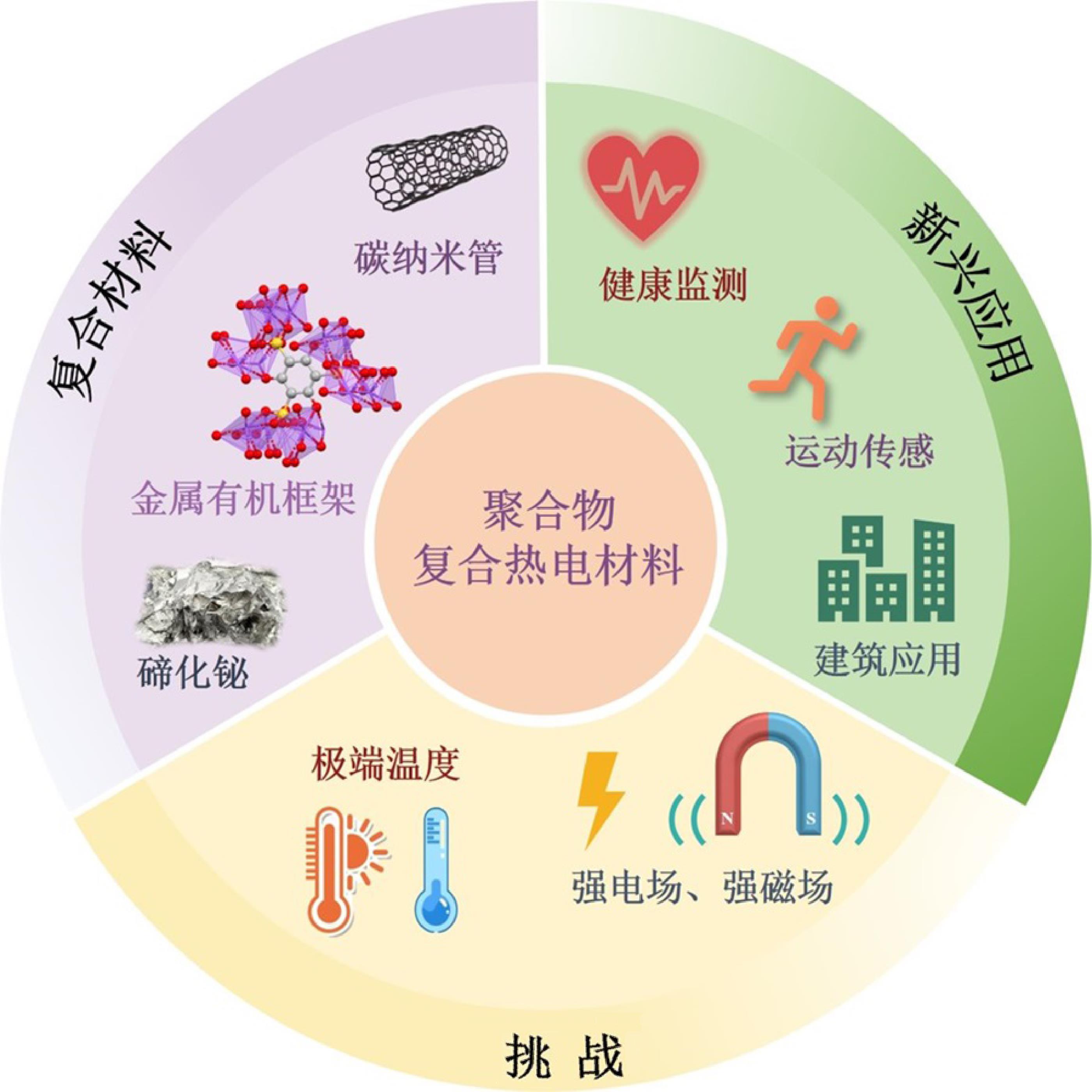
Fig. 1 Sketch of thermoelectric polymer composites and emerging application scenarios
| 复合材料 | 制备方法 | σ/(S/cm) | S/(μV/K) | PF/(μW/(m∙K2)) | ZT | 参考文献 |
|---|---|---|---|---|---|---|
| P3HT/47% SWCNT | 溶液加工 | 219 | 54.48 | 65 | — | [ |
| PEDOT∶PSS/0.4% Bi2Te3 | 旋涂 | 1 181.4 | 22 | 57.18 | ~0.2 | [ |
| PEDOT∶PSS/2% BP | 物理混合 | 1 446 | 15.82 | 36.2 | 0.042 | [ |
| PEDOT/SWCNT | 层层组装 | 2 100 ± 100 | 27.17 | 155 | — | [ |
| PANI/50% SWCNT | 电聚合+物理混合 | 331.25 ± 8.49 | 47.06 | 73.33 ± 2.03 | ~0.95 | [ |
| PEDOT∶PSS/Te | 4 839.9 | 10.35 | 51.84 | 0.08 | [ | |
| PEDOT/UiO-67 | 原位聚合 | 3.0 × 10⁻³ | 11.06 | 3.67 × 10⁻⁵ | — | [ |
| PANI/67% MOF-801 | 原位聚合 | 6.2 | -140.99 | 12.33 | 0.015 | [ |
| PEDOT∶PSS/33% Ti3C2T x | 滴涂 | 472.1 | 57.3 | 155 | — | [ |
| P3HT/60% SWCNT | 物理混合 | ~716 | ~48.61 | 169.2 ± 13.5 | — | [ |
| PE/PEDOT/72% SWCNT | 电聚合+物理混合 | ~459.8 | 47.58 | 103.81 | — | [ |
Table 1 Thermoelectric properties of representative polymer composites
| 复合材料 | 制备方法 | σ/(S/cm) | S/(μV/K) | PF/(μW/(m∙K2)) | ZT | 参考文献 |
|---|---|---|---|---|---|---|
| P3HT/47% SWCNT | 溶液加工 | 219 | 54.48 | 65 | — | [ |
| PEDOT∶PSS/0.4% Bi2Te3 | 旋涂 | 1 181.4 | 22 | 57.18 | ~0.2 | [ |
| PEDOT∶PSS/2% BP | 物理混合 | 1 446 | 15.82 | 36.2 | 0.042 | [ |
| PEDOT/SWCNT | 层层组装 | 2 100 ± 100 | 27.17 | 155 | — | [ |
| PANI/50% SWCNT | 电聚合+物理混合 | 331.25 ± 8.49 | 47.06 | 73.33 ± 2.03 | ~0.95 | [ |
| PEDOT∶PSS/Te | 4 839.9 | 10.35 | 51.84 | 0.08 | [ | |
| PEDOT/UiO-67 | 原位聚合 | 3.0 × 10⁻³ | 11.06 | 3.67 × 10⁻⁵ | — | [ |
| PANI/67% MOF-801 | 原位聚合 | 6.2 | -140.99 | 12.33 | 0.015 | [ |
| PEDOT∶PSS/33% Ti3C2T x | 滴涂 | 472.1 | 57.3 | 155 | — | [ |
| P3HT/60% SWCNT | 物理混合 | ~716 | ~48.61 | 169.2 ± 13.5 | — | [ |
| PE/PEDOT/72% SWCNT | 电聚合+物理混合 | ~459.8 | 47.58 | 103.81 | — | [ |
| [1] | Zhang Q, Sun Y M, Xu W, et al. Organic thermoelectric materials: emerging green energy materials converting heat to electricity directly and efficiently[J]. Adv Mater, 2014, 26: 6829-6851. DOI: 10.1002/adma.201305371 . |
| [2] | Hu Y J, Shi H, Song H J, et al. Effects of a proton scavenger on the thermoelectric performance of free-standing polythiophene and its derivative films[J]. Synth Met, 2013, 181: 23-26. DOI: 10.1016/j.synthmet.2013.08.006 . |
| [3] | Hao L P, Kang J Y, Shi J L, et al. Enhanced thermoelectric performance of poly(3-substituted thiophene)/single-walled carbon nanotube composites via polar side chain modification[J]. Compos Sci Technol, 2020, 199: 108359. DOI: 10.1016/j.compscitech.2020.108359 . |
| [4] | Lee Y H, Oh J W, Lee S-S, et al. Highly ordered nanoconfinement effect from evaporation-induced self-assembly of block copolymers on in situ polymerized PEDOT∶Tos[J]. ACS Macro Lett, 2017, 6(4): 386-392. DOI: 10.1021/acsmacrolett.7b00137 . |
| [5] | Wu J S, Sun Y M, Xu W, et al. Investigating thermoelectric properties of doped polyaniline nanowires[J]. Synth Met, 2014, 189: 177-182. DOI: 10.1016/j.synthmet.2014.01.007 . |
| [6] | Liang L R, Chen G M, Guo C-Y. Polypyrrole nanostructures and their thermoelectric performance[J]. Mater Chem Front, 2017, 1(2): 380-386. DOI: 10.1039/c6qm00061d . |
| [7] | Yao H Y, Fan Z, Cheng H L, et al. Recent development of thermoelectric polymers and composites[J]. Macromol Rapid Commun, 2018, 39: 1700727. DOI: 10.1002/marc.201700727 . |
| [8] | Park K T, Lee T M, Ko Y P, et al. High-performance thermoelectric fabric based on a stitched carbon nanotube fiber[J]. ACS Appl Mater Interfaces, 2021, 13(5): 6257-6264. DOI: 10.1021/acsami.0c20252 . |
| [9] | Shalini V, Navaneethan M, Harish S, et al. Design and fabrication of PANI/GO nanocomposite for enhanced room-temperature thermoelectric application[J]. Appl Surf Sci, 2019, 493: 1350-1360. DOI: 10.1016/j.apsusc.2019.06.249 . |
| [10] | Rathi V, Singh K, Parmar K P S, et al. Boosting thermoelectric performance of PEDOT∶PSS/Bi2Te3 hybrid films via structural and interfacial engineering[J]. Org Electron, 2024, 133: 107103. DOI: 10.1016/j.orgel.2024.107103 . |
| [11] | Ju H, Park D B, Kim J H. Thermoelectric enhancement in multilayer thin-films of tin chalcogenide nanosheets/conductive polymers[J]. Nanoscale, 2019, 11(34): 16114-16121. DOI: 10.1039/c9nr04712c . |
| [12] | Xu W J, Zhao Y J, Wang H R, et al. Postsynthetic-modified PANI/MOF composites with tunable thermoelectric and photoelectric properties[J]. Chem Eur J, 2021, 27(15): 5011-5018. DOI: 10.1002/chem.202005474 . |
| [13] | Guan X, Feng W, Wang X Z, et al. Significant enhancement in the Seebeck coefficient and power factor of p‑type poly(3,4-ethylenedioxythiophene)∶poly(styrenesulfonate) through the incorporation of n‑type MXene[J]. ACS Appl Mater Interfaces, 2020, 12(11): 13013-13020. DOI: 10.1021/acsami.9b21185 . |
| [14] | Novak T G, Shin H S, Kim J M, et al. Low-cost black phosphorus nano fillers for improved thermoelectric performance in PEDOT∶PSS composite films[J]. ACS Appl Mater Interfaces, 2018, 10(21): 17957-17962. DOI: 10.1021/acsami.8b03982 . |
| [15] | He J, Tritt T M. Advances in thermoelectric materials research: looking back and moving forward[J]. Science, 2017, 357: eaak9997. DOI: 10.1126/science.aak9997 . |
| [16] | Russ B, Glaudell A, Urban J J, et al. Organic thermoelectric materials for energy harvesting and temperature control[J]. Nat Rev Mater, 2016, 1: 16050. DOI: 10.1038/natrevmats.2016.50 . |
| [17] | Fan Z, Du D H, Guan X, et al. Polymer films with ultrahigh thermoelectric properties arising from significant seebeck coefficient enhancement by ion accumulation on surface[J]. Nano Energy, 2018, 51: 481-488. DOI: 10.1016/j.nanoen.2018.07.002 . |
| [18] | Liang L R, Gao C Y, Chen G M, et al. Large-area, stretchable, super flexible and mechanically-stable thermoelectric films of polymer/carbon nanotube composites[J]. J Mater Chem C, 2016, 4(3): 526-532. DOI: 10.1039/c5tc03768a . |
| [19] | Wang L M, Yao Q, Xiao J X, et al. Engineered molecular chain ordering in single-walled carbon nanotubes/polyaniline composite films for high-performance organic thermoelectric materials[J]. Chem-Asian J, 2016, 11(12): 1804-1810. DOI: 10.1002/asia.201600212 . |
| [20] | Wu X, Luo Q Y, Yin S X, et al. Organic/inorganic thermoelectric composites electrochemical synthesis, properties, and applications[J]. J Mater Sci, 2021, 56(35): 19311-19328. DOI: 10.1007/s10853-021-06512-x . |
| [21] | Ibrahim N I, Wasfi A S. A comparative study of polyaniline/MWCNT with polyaniline/SWCNT nanocomposite films synthesized by microwave plasma polymerization[J]. Synth Met, 2019, 250: 49-54. DOI: 10.1016/j.synthmet.2019.02.007 . |
| [22] | Culebras M, Cho C Y, Krecker M, et al. High thermoelectric power factor organic thin films through combination of nanotube multilayer assembly and electrochemical polymerization[J]. ACS Appl Mater Interfaces, 2017, 9(7): 6306-6313. DOI: 10.1021/acsami.6b15327 . |
| [23] | Nandihalli N, Liu C-J, Mori T. Polymer based thermoelectric nanocomposite materials and devices: fabrication and characteristics[J]. Nano Energy, 2020, 78: 105186. DOI: 10.1016/j.nanoen.2020.105186 . |
| [24] | Huo B C, Guo C-Y. Advances in thermoelectric composites consisting of conductive polymers and fillers with different architectures[J]. Molecules, 2022, 27: 6932. DOI: 10.3390/molecules27206932 . |
| [25] | Song E W, Liu P Y, Lv Y F, et al. Conductive polymer-based thermoelectric composites: preparation, properties, and applications[J]. J Compos Sci, 2024, 8(8): 308. DOI: 10.3390/jcs8080308 . |
| [26] | Zhu M Y, He B Q, Zhang K, et al. Recent progress of poly(3-hexylthiophene)-based materials for thermoelectric applications[J]. Mater Chem Front, 2024, 8(13): 2454-2492. DOI: 10.1039/d4qm00213j . |
| [27] | Fan W S, Guo C Y, Chen G M. Flexible films of poly(3,4-ethylenedioxythiophene)/carbon nanotube thermoelectric composites prepared by dynamic 3-phase interfacial electropolymerization and subsequent physical mixing[J]. J Mater Chem A, 2018, 6(26): 12275-12280. DOI: 10.1039/c8ta04838j . |
| [28] | Fan W S, Liang L R, Zhang B B, et al. PEDOT thermoelectric composites with excellent power factors prepared by 3-phase interfacial electropolymerization and carbon nanotube chemical doping[J]. J Mater Chem A, 2019, 7(22): 13687-13694. DOI: 10.1039/c9ta03153g . |
| [29] | Yin S X, Wu X, Wang R Y, et al. Composite aerogel of electropolymerized polyaniline and SWCNTs with high thermoelectric performance[J]. Macromol Mater Eng, 2022, 307(8): 2200094. DOI: 10.1002/mame.202200094 . |
| [30] | Xiong J H, Jiang F X, Shi H, et al. Liquid exfoliated graphene as dopant for improving the thermoelectric power factor of conductive PEDOT∶PSS nanofilm with hydrazine treatment[J]. ACS Appl Mater Interfaces, 2015, 7(27): 14917-14925. DOI: 10.1021/acsami.5b03692 . |
| [31] | Bae E J, Kang Y H, Jang K S, et al. Enhancement of thermoelectric properties of PEDOT∶PSS and tellurium-PEDOT∶PSS hybrid composites by simple chemical treatment[J]. Sci Rep, 2016, 6: 18805. DOI: 10.1038/srep18805 . |
| [32] | Gonzalez-Juarez M, Isaacs M A, Bradshaw D, et al. Enhanced thermoelectric properties of a semiconducting two dimensional metal-organic framework via iodine loading[J]. ACS Appl Mater Interfaces, 2023, 15(4): 5478-5486. DOI: 10.1021/acsami.2c20770 . |
| [33] | Li K C, Wang J, Wang H. Recent advances of 2D conductive metal-organic frameworks in thermoelectrics[J]. J Mater Chem A, 2024, 12(24): 14245-14267. DOI: 10.1039/d4ta01820f . |
| [34] | 江润璐, 吴鑫, 郭昊骋, 等. UiO-67基导电复合材料的制备及其热电性能研究[J]. 无机材料学报, 2023, 38(11): 1338-1344. DOI: 10.15541/jim20230197 . |
| [35] | Ebrahim A, Ghali M, El-Moneim A A. Microporous Zr‑metal‑organic frameworks based‑nanocomposites for thermoelectric applications[J]. Sci Rep, 2024, 14: 13067. DOI: 10.1038/s41598-024-62317-3 . |
| [36] | Wang G R, Mei Z Y, Li Y, et al. Flame-retardant thermoelectric responsive coating based on poly(3,4-ethylenedioxythiphene) modified metal-organic frameworks[J]. e-Polymers, 2024, 24(1): 20230138. DOI: 10.1515/epoly-2023-0138 . |
| [37] | Luo Q Y, Wu X, Wang E Q, et al. Compositing nanostructured polyaniline with single-walled carbon nanotubes for high thermoelectric performance[J]. Int J Energy Res, 2023, 2023: 6989497. DOI: 10.1155/2023/6989497 . |
| [38] | Yin S X, Lu W T, Wu X, et al. Enhancing thermoelectric performance of polyaniline/single-walled carbon nanotubes composites via dimethyl sulfoxide-mediated electropolymerization[J]. ACS Appl Mater Interfaces, 2021, 13(3): 3930-3936. DOI: 10.1021/acsami.0c19100 . |
| [39] | Li Y Y, Ai L K, Luo Q Y, et al. Compositing benzothieno[3,2-b]benzofuran derivatives with single-walled carbon nanotubes for enhanced thermoelectric performance[J]. Molecules, 2023, 28(18): 6519. DOI: 10.3390/molecules28186519 . |
| [40] | Li Y Y, Dong J X, Wu X, et al. Elevating thermoelectric performance by compositing dibromo-substituted thienoacene with SWCNTs[J]. ACS Appl Mater Interfaces, 2024, 16(27): 35190-35199. DOI: 10.1021/acsami.4c07042 . |
| [41] | Qu D W, Huang X, Li X, et al. Annular flexible thermoelectric devices with integrated-module architecture[J]. npj Flexible Electron, 2020, 4(1): 1. DOI: 10.1038/s41528-020-0064-2 . |
| [42] | Liang L R, Wang M M, Wang X D, et al. Initiating a stretchable, compressible, and wearable thermoelectric generator by a spiral architecture with ternary nanocomposites for efficient heat harvesting[J]. Adv Funct Mater, 2022, 32(15): 2111435. DOI: 10.1002/adfm.202111435 . |
| [43] | Li H X, Ding Z F, Zhou Q, et al. Harness high‑temperature thermal energy via elastic thermoelectric aerogels[J]. Nano-Micro Lett, 2024, 16(1): 151. DOI: 10.1007/s40820-024-01370-z . |
| [44] | Li G, Chen C Z, Liu Z J, et al. Distinguishing thermoelectric and photoelectric modes enables intelligent real-time detection of indoor electrical safety hazards[J]. Mater Horiz, 2024, 11(7): 1679. DOI: 10.1039/d3mh02187d . |
| [45] | Sun Q, Du C Y, Chen G M. Thermoelectric materials and applications in buildings[J]. Prog Mater Sci, 2025, 149: 101402. DOI: 10.1016/j.pmatsci.2024.101402 . |
| [46] | Liao Z X, Zhou X Y, Wei G Y, et al. Intrinsically self-healable and wearable all-organic thermoelectric composite with high electrical conductivity for heat harvesting[J]. ACS Appl Mater Interfaces, 2022, 14(38): 43421-43430. DOI: 10.1021/acsami.2c13593 . |
| [47] | Wu X, Yin S X, Guo C Y. Self-healable and robust PE/PEDOT/SWCNT thermoelectric composites[J]. ACS Appl Mater Interfaces, 2022, 14(28): 32056-32065. DOI: 10.1021/acsami.2c07490 . |
| [48] | Malik Y T, Akbar Z A, Seo J Y, et al. Self-healable organic-inorganic hybrid thermoelectric materials with excellent ionic thermoelectric properties[J]. Adv Energy Mater, 2022, 12(6): 2103070. DOI: 10.1002/aenm.202103070 . |
| [49] | Hao Y Z, Zuo Y T, Zheng J Z, et al. Machine learning for predicting ultralow thermal conductivity and high ZT in complex thermoelectric materials[J]. ACS Appl Mater Interfaces, 2024, 16(36): 47866-47878. DOI: 10.1021/acsami.4c09043 . |
| [50] | Ebrahimibagha D, Armida S A, Datta S, et al. Machine learning based models to investigate the thermoelectric performance of carbon nanotube-polyaniline nanocomposites[J]. Comput Mater Sci, 2024, 232: 112601. DOI: 10.1016/j.commatsci.2023.112601 . |
| [51] | Yang Y, Zhao G J, Cheng X, et al. Stretchable and healable conductive elastomer based on PEDOT∶PSS/natural rubber for self-powered temperature and strain sensing[J]. ACS Appl Mater Interfaces, 2021, 13(12): 14599-14611. DOI: 10.1021/acsami.1c00879 . |
| [1] | Dengke ZHANG, Zenghui WANG. Experimental study of liquid metal convection driven by Seebeck effect under the influence of magnetic field [J]. Journal of University of Chinese Academy of Sciences, 2026, 43(2): 164-172. |
| Viewed | ||||||
|
Full text |
|
|||||
|
Abstract |
|
|||||
Copyright © Journal of University of Chinese Academy of Sciences
Support by Beijing Magtech Co.ltd support@magtech.com.cn

