Journal of University of Chinese Academy of Sciences ›› 2026, Vol. 43 ›› Issue (3): 393-403.DOI: 10.7523/j.ucas.2025.046
• Earth Science • Previous Articles Next Articles
Yongqian CHEN1,2,3, Huai ZHANG1, Yaolin SHI1( )
)
Received:2025-05-16
Accepted:2025-05-26
Online:2026-05-15
Contact:
Yaolin SHI
CLC Number:
Yongqian CHEN, Huai ZHANG, Yaolin SHI. Dynamic stress characteristics of Xinjiang Wushi MS 7.1 earthquake recorded at borehole strain stations in northern Shanxi[J]. Journal of University of Chinese Academy of Sciences, 2026, 43(3): 393-403.
Add to citation manager EndNote|Ris|BibTeX
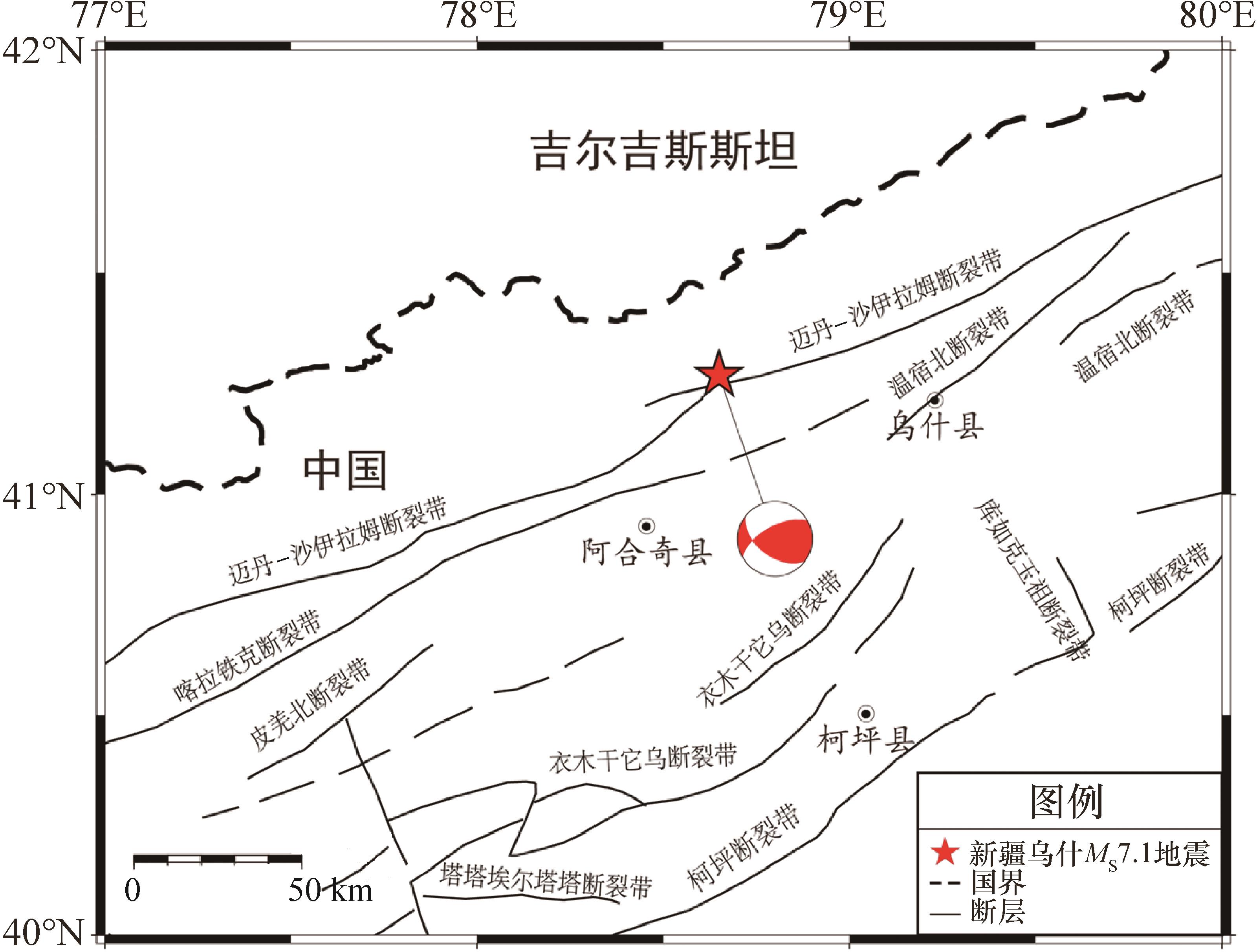
Fig.1 Distribution of fracture zones around the epicentre of MS7.1 earthquake in Wushi, Xinjiang, on 23 January 2024
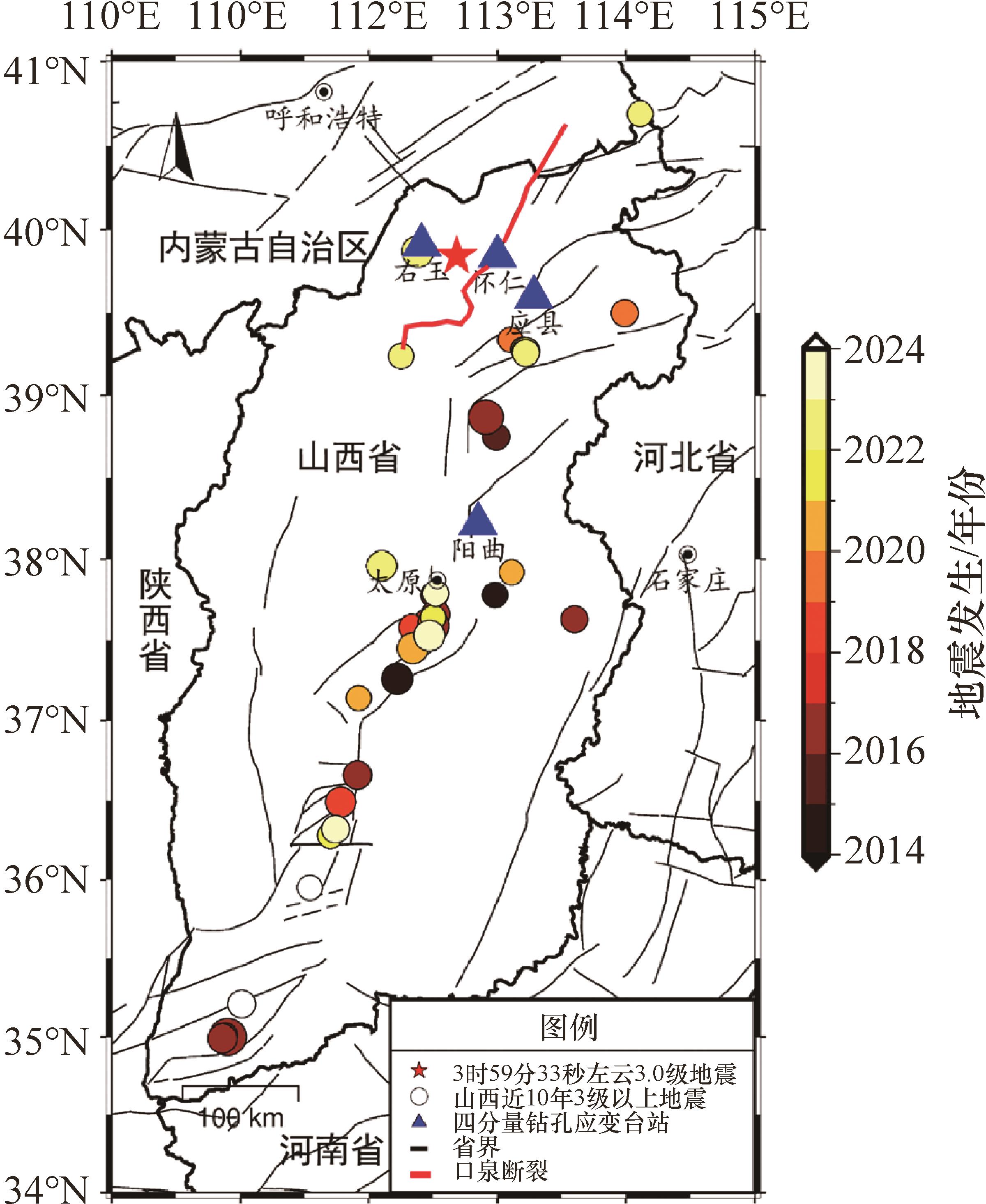
Fig.2 Distribution of borehole strain stations in Shanxi Province and distribution of earthquakes of magnitude 3 or above in Shanxi from 2014 to 2024
| 序号 | 台站 | 经度 | 纬度 | 方位角 | |||
|---|---|---|---|---|---|---|---|
| 元件1 | 元件2 | 元件3 | 元件4 | ||||
| 1 | 右玉 | 112.41 | 39.91 | -137 | -92 | -47 | -2 |
| 2 | 应县 | 113.284 | 39.597 | -219 | -174 | -129 | -84 |
| 3 | 阳曲 | 112.85 | 38.22 | 1 | 46 | 91 | 136 |
| 4 | 怀仁 | 113.00 | 39.841 | -16 | 29 | 74 | 119 |
Table 1 Basic information of the station
| 序号 | 台站 | 经度 | 纬度 | 方位角 | |||
|---|---|---|---|---|---|---|---|
| 元件1 | 元件2 | 元件3 | 元件4 | ||||
| 1 | 右玉 | 112.41 | 39.91 | -137 | -92 | -47 | -2 |
| 2 | 应县 | 113.284 | 39.597 | -219 | -174 | -129 | -84 |
| 3 | 阳曲 | 112.85 | 38.22 | 1 | 46 | 91 | 136 |
| 4 | 怀仁 | 113.00 | 39.841 | -16 | 29 | 74 | 119 |
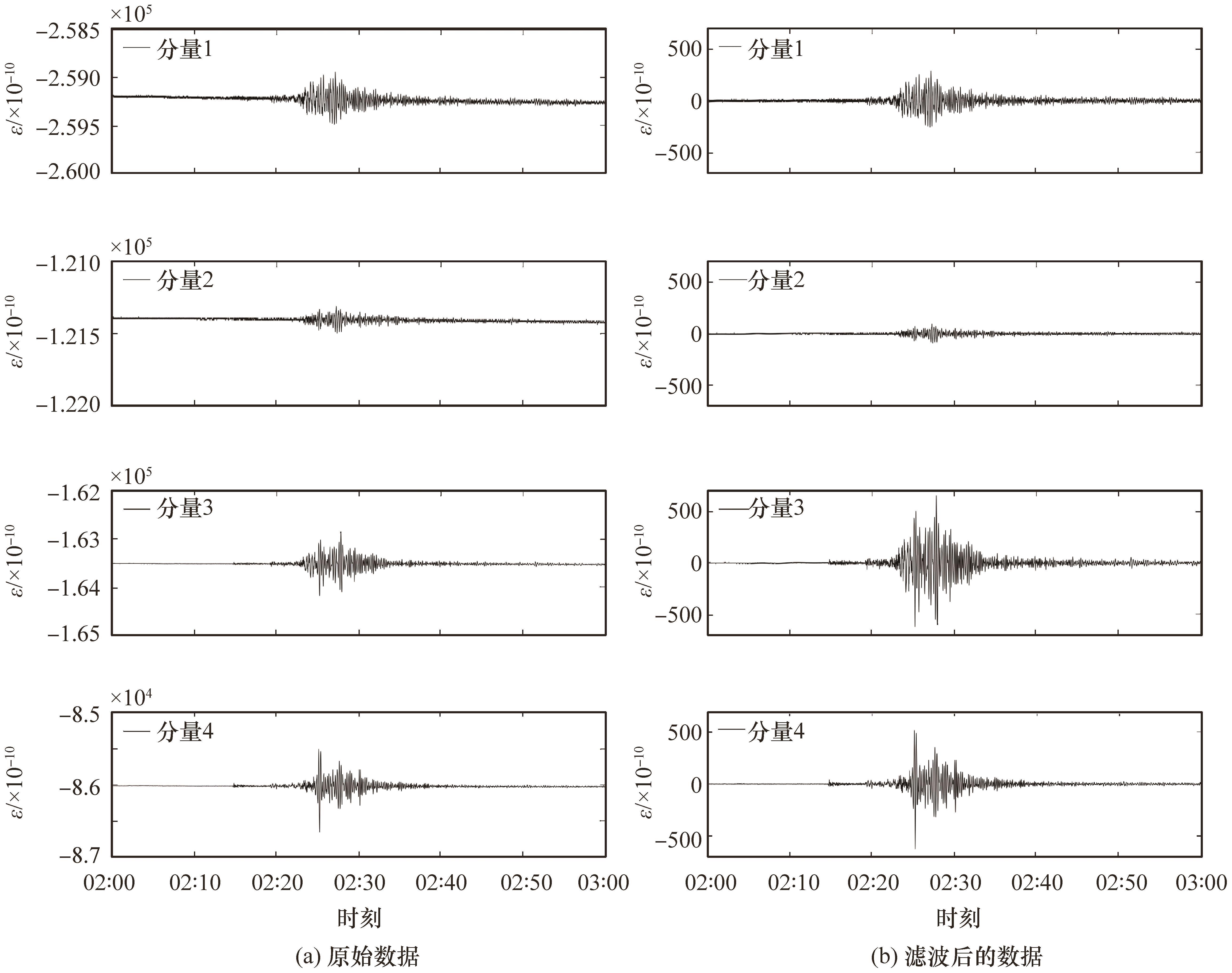
Fig.3 Comparison between 100 Hz raw data (a) and filtered data (b) at Youyu station
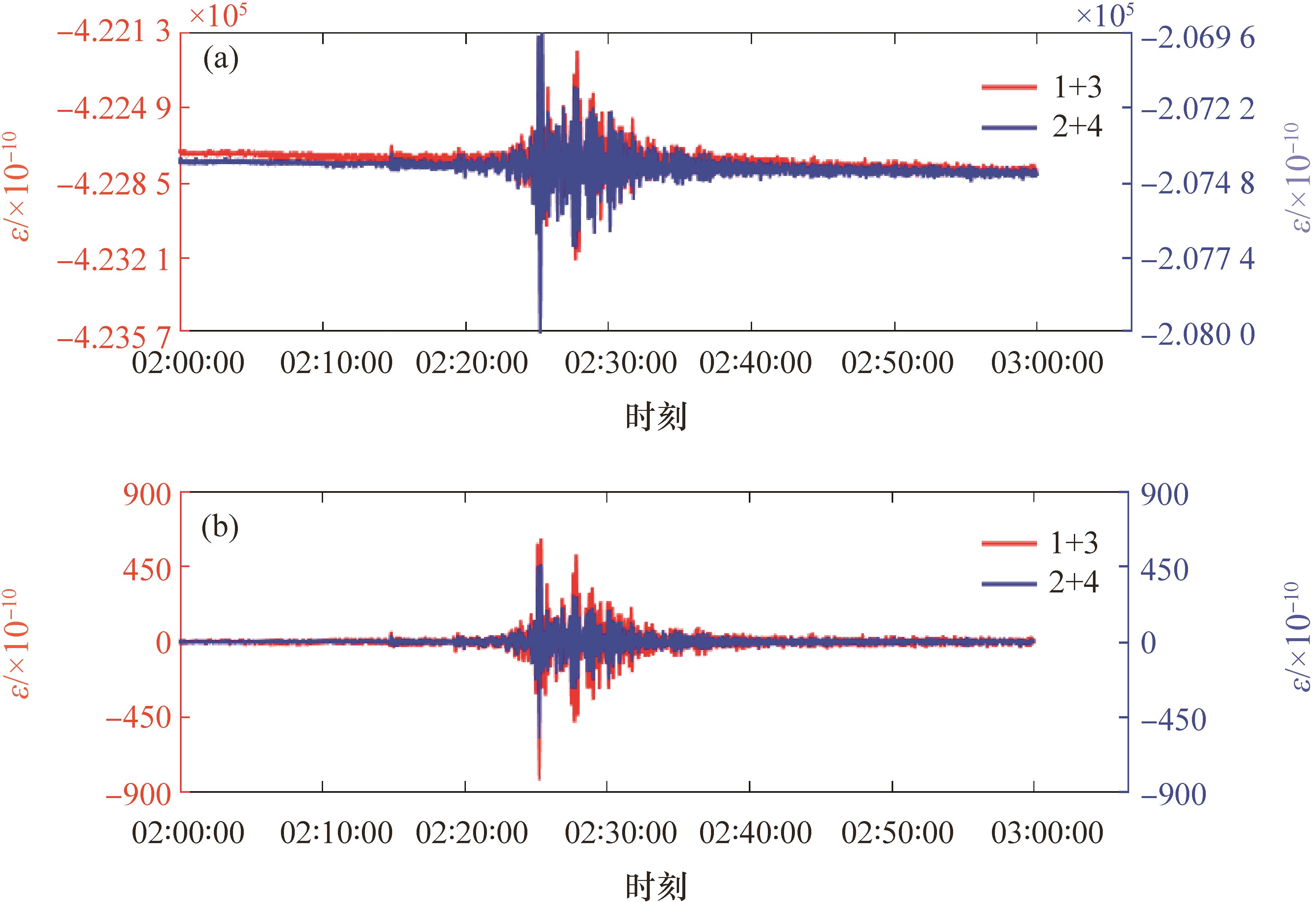
Fig.4 Comparison between self-test (a) of 100 Hz strain data and self-test (b) after filtering
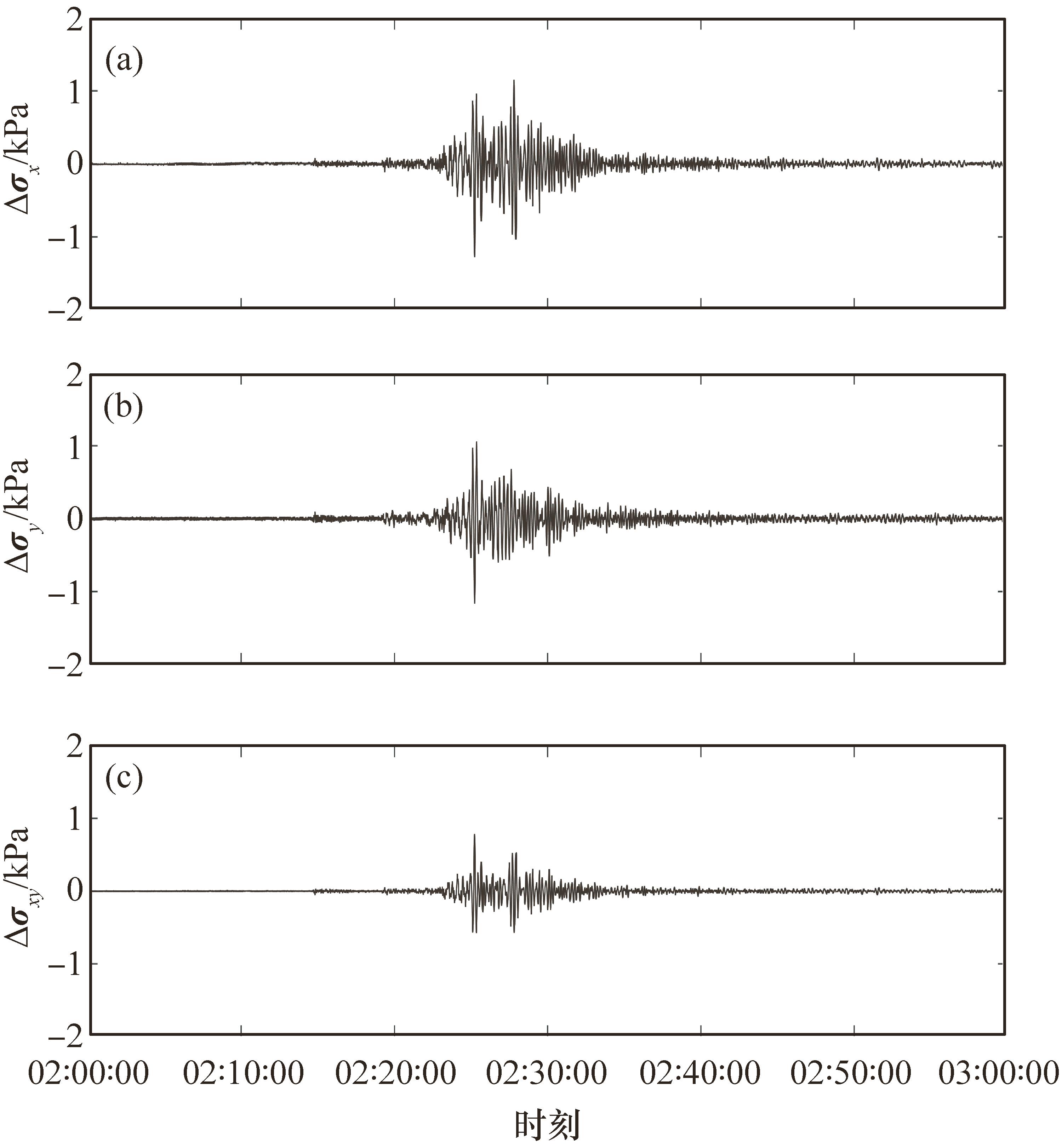
Fig.5 Dynamic stress three-component diagram of Youyu station
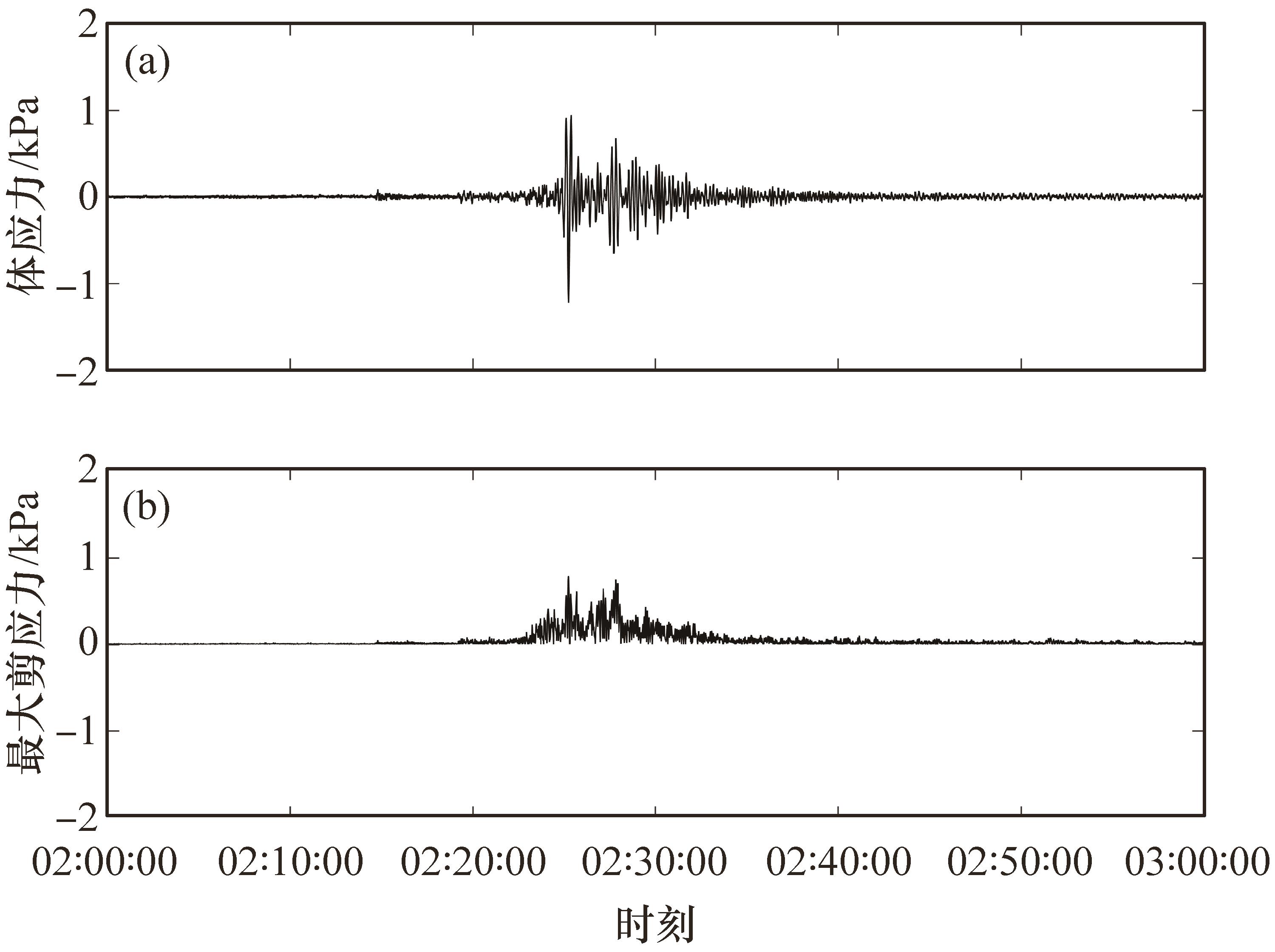
Fig.6 Body stress (a) and maximum shear stress (b) of Youyu station
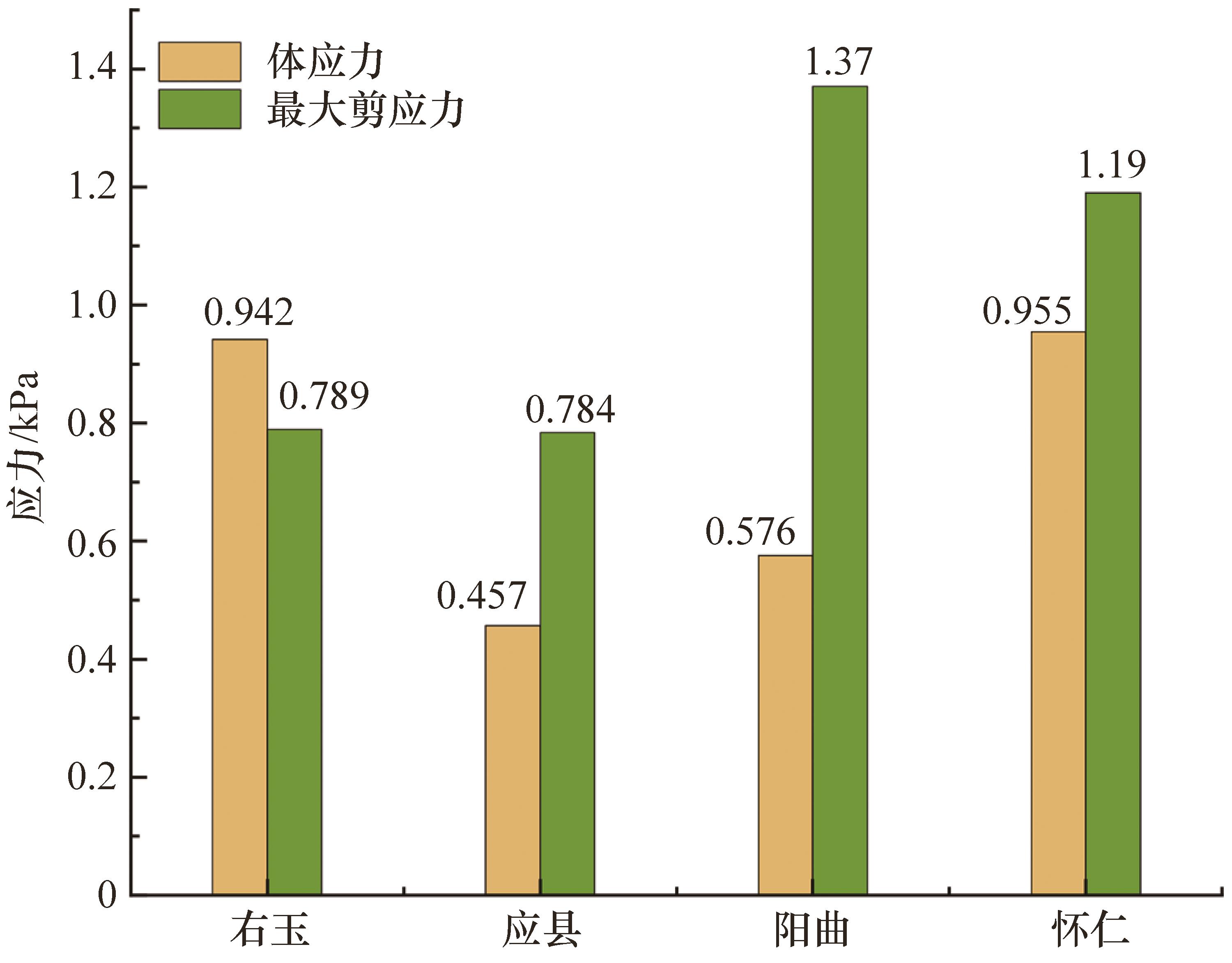
Fig.7 Amplitude of body stress and maximum shear stress at each station
| 台站 | 震中距/(°) | 发震时刻 (北京时间) | P波 | S波 | Love波 | Rayleigh波 | ||||
|---|---|---|---|---|---|---|---|---|---|---|
| 走时/s | 到达时刻 | 走时/s | 到达时刻 | 走时/min | 到达时刻 | 走时/min | 到达时刻 | |||
| 右玉 | 25.53 | 02:09:04 | 326.9 | 02:14:30.9 | 594.2 | 02:18:58.2 | 12.1 | 02:21:10 | 13.2 | 02:22:16 |
| 应县 | 26.25 | 02:09:04 | 333.5 | 02:14:37.5 | 605.6 | 02:19:09.6 | 12.3 | 02:21:22 | 13.7 | 02:22:46 |
| 阳曲 | 26.32 | 02:09:04 | 334.1 | 02:14:38.1 | 606.7 | 02:19:10.7 | 12.5 | 02:21:34 | 13.8 | 02:22:52 |
| 怀仁 | 25.98 | 02:09:04 | 331.1 | 02:14:35.1 | 601.4 | 02:19:05.4 | 12.2 | 02:21:16 | 13.5 | 02:22:34 |
Table 2 Theoretical travel times and arrival times of seismic waves
| 台站 | 震中距/(°) | 发震时刻 (北京时间) | P波 | S波 | Love波 | Rayleigh波 | ||||
|---|---|---|---|---|---|---|---|---|---|---|
| 走时/s | 到达时刻 | 走时/s | 到达时刻 | 走时/min | 到达时刻 | 走时/min | 到达时刻 | |||
| 右玉 | 25.53 | 02:09:04 | 326.9 | 02:14:30.9 | 594.2 | 02:18:58.2 | 12.1 | 02:21:10 | 13.2 | 02:22:16 |
| 应县 | 26.25 | 02:09:04 | 333.5 | 02:14:37.5 | 605.6 | 02:19:09.6 | 12.3 | 02:21:22 | 13.7 | 02:22:46 |
| 阳曲 | 26.32 | 02:09:04 | 334.1 | 02:14:38.1 | 606.7 | 02:19:10.7 | 12.5 | 02:21:34 | 13.8 | 02:22:52 |
| 怀仁 | 25.98 | 02:09:04 | 331.1 | 02:14:35.1 | 601.4 | 02:19:05.4 | 12.2 | 02:21:16 | 13.5 | 02:22:34 |
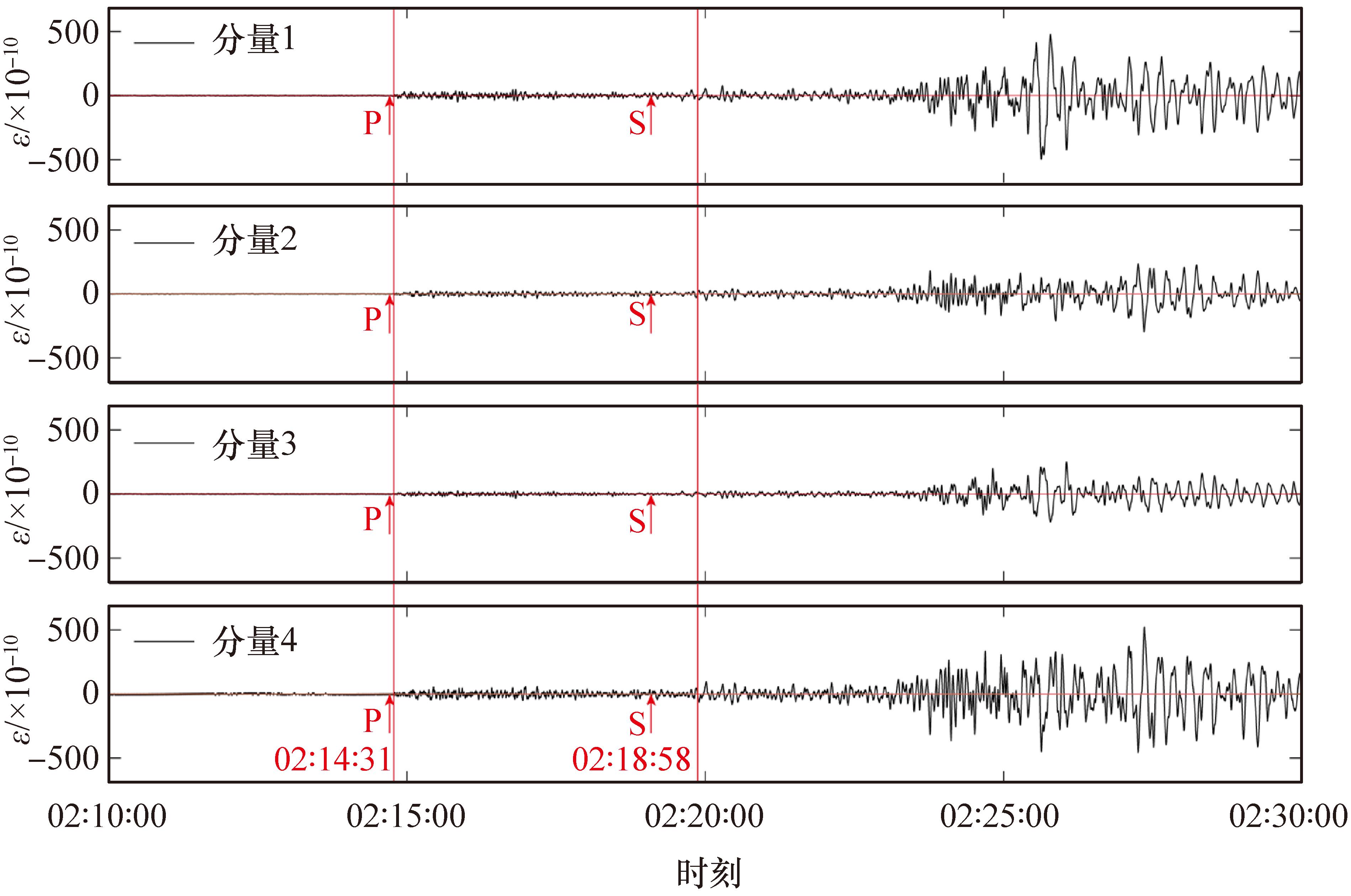
Fig.8 Time window of filtered data at Youyu station
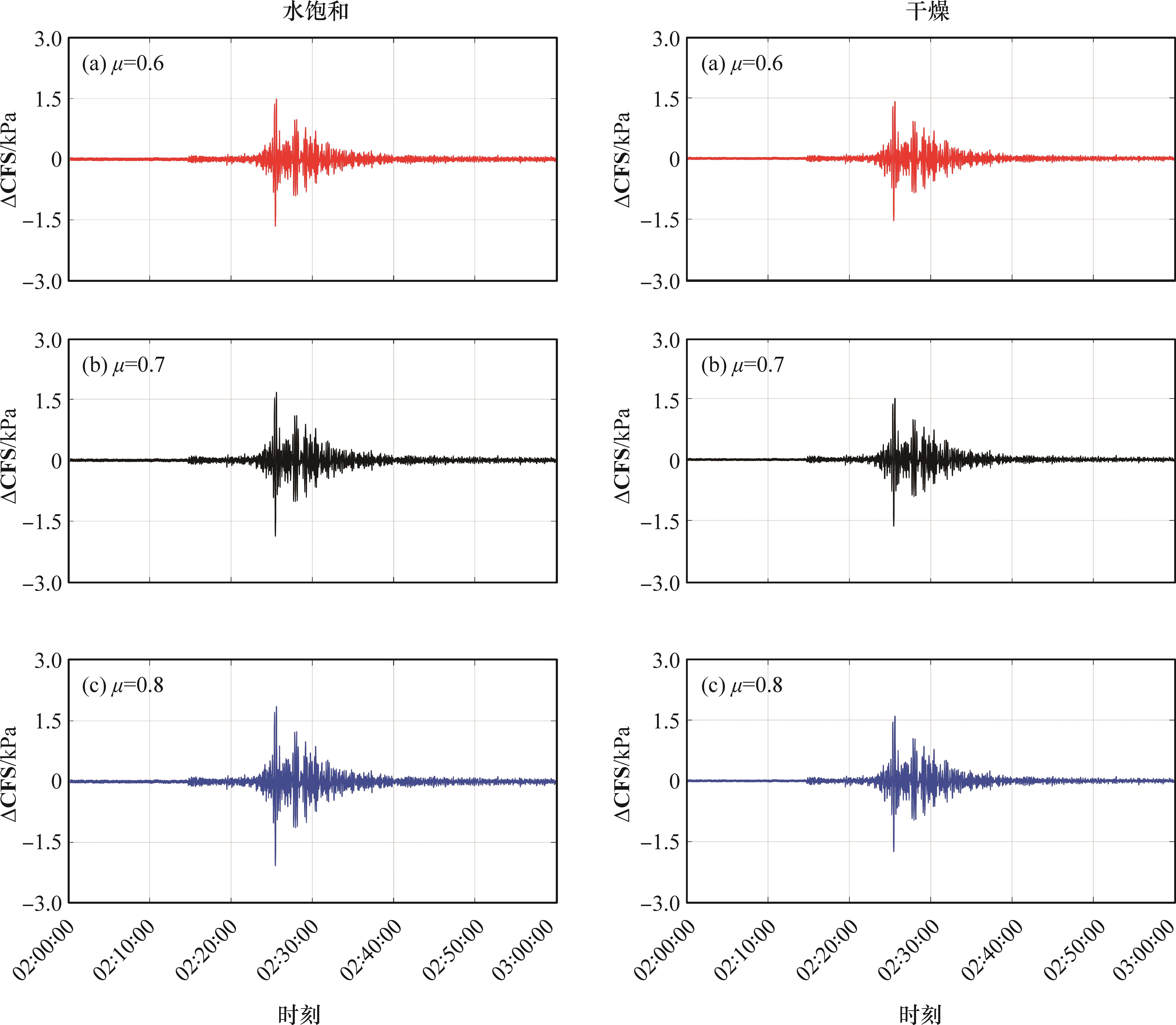
Fig.9 Dynamic Coulomb stress changes on the Kouquan fault zone in water-saturated and dry rock
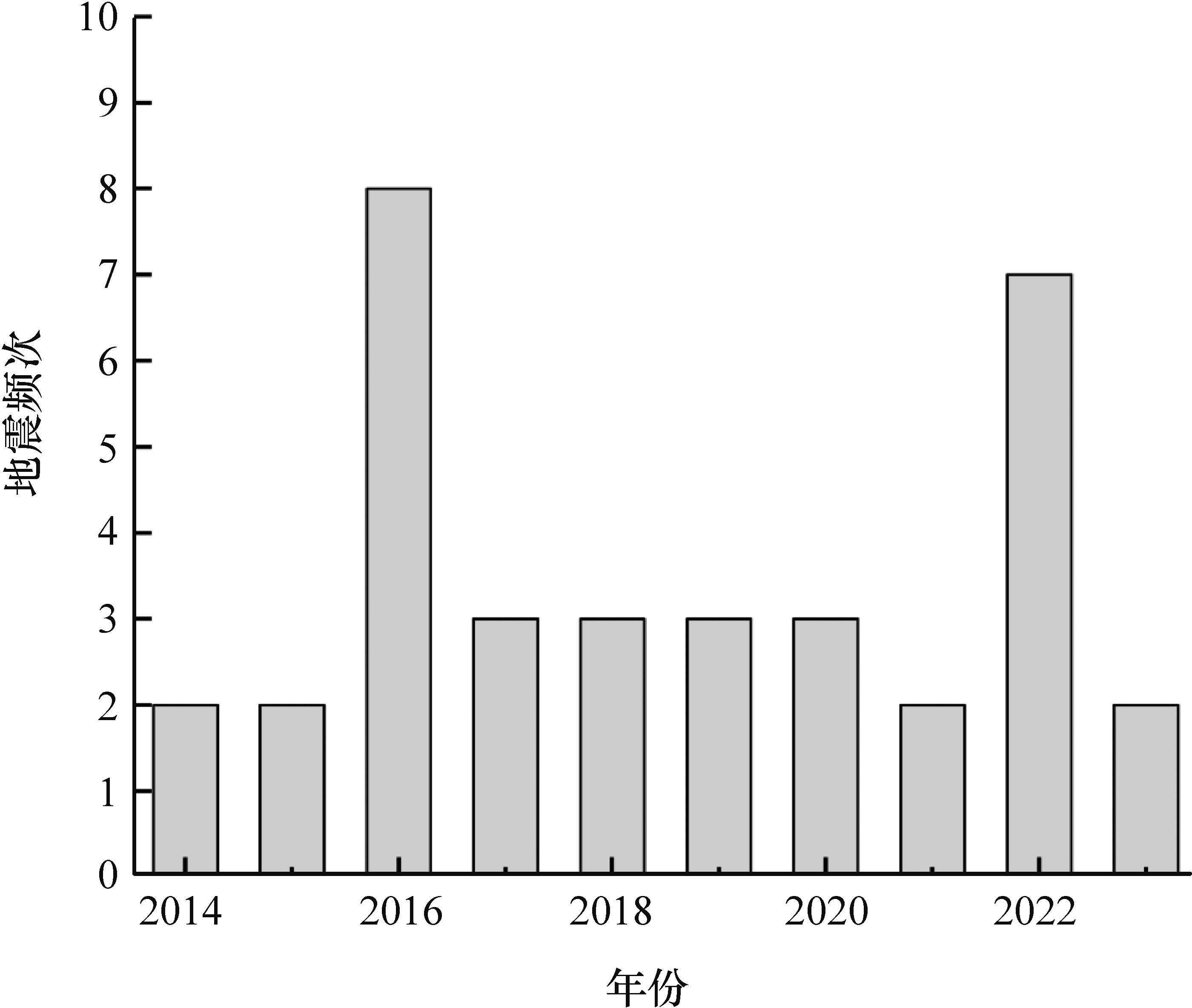
Fig.10 Frequency statistics of earthquakes of magnitude 3 or above in Shanxi from 2014 to 2023
| [1] | Stein R S, King G C, Lin J. Change in failure stress on the southern San Andreas fault system caused by the 1992 magnitude = 7.4 Landers earthquake[J]. Science, 1992, 258(5086): 1328-1332. DOI: 10.1126/science.258.5086.1328 . |
| [2] | King G C P, Stein R S, Lin J. Static stress changes and the triggering of earthquakes[J]. Bulletin of the Seismological Society of America, 1994, 84(3): 935-953. DOI: 10.1785/BSSA0840030935 . |
| [3] | Stein R S. The role of stress transfer in earthquake occurrence[J]. Nature, 1999, 402(6762): 605-609. DOI: 10.1038/45144 . |
| [4] | Harris R A, Simpson R W, Reasenberg P A. Influence of static stress changes on earthquake locations in southern California[J]. Nature, 1995, 375(6528): 221-224. DOI: 10.1038/375221a0 . |
| [5] | 任天翔, 杨少华, 董培育, 等. 大渡河水位变化对四川姑咱台钻孔应变观测影响的数值分析[J]. 中国科学院大学学报, 2018, 35(5): 674-680. DOI: 10.7523/j.issn.2095-6134.2018.05.014 . |
| [6] | Gomberg J, Beeler N M, Blanpied M L, et al. Earthquake triggering by transient and static deformations[J]. Journal of Geophysical Research: Solid Earth, 1998, 103(B10): 24411-24426. DOI: 10.1029/98JB01125 . |
| [7] | Parsons T, Dreger D S. Static-stress impact of the 1992 Landers earthquake sequence on nucleation and slip at the site of the 1999 M=7.1 Hector Mine earthquake, Southern California[J]. Geophysical Research Letters, 2000, 27(13): 1949-1952. DOI: 10.1029/1999GL011272 . |
| [8] | 盛书中, 万永革, 蒋长胜, 等. 2015年尼泊尔MS8.1强震对中国大陆静态应力触发影响的初探[J]. 地球物理学报, 2015, 58(5): 1834-1842. |
| [9] | 瞿武林, 张贝, 黄禄渊, 等. 2004年MW9.3苏门答腊地震产生的库仑应力[J]. 中国科学院大学学报, 2017, 34(1): 86-98. DOI: 10.7523/j.issn.2095-6134.2017.01.012 . |
| [10] | 张小娟, 盛书中, 葛坤朋, 等. 2023年土耳其双震静态应力触发研究[J]. 震灾防御技术, 2023, 18(3): 505-517. DOI: 10.11899/zzfy20230308 . |
| [11] | Gomberg J. Stress/strain changes and triggered seismicity following the Mw7.3 Landers, California earthquake[J]. Journal of Geophysical Research: Solid Earth, 1996, 101(B1): 751-764. DOI: 10.1029/95JB03251 . |
| [12] | Brodsky E E, Karakostas V, Kanamori H. A new observation of dynamically triggered regional seismicity: earthquakes in Greece following the August 1999 Izmit, Turkey earthquake[J]. Geophysical Research Letters, 2000, 27(17): 2741-2744. DOI: 10.1029/2000GL011534 . |
| [13] | Mohamad R, Darkal A N, Seber D, et al. Remote earthquake triggering along the dead sea Fault in Syria following the 1995 gulf of Aqaba earthquake (MS = 7.3)[J]. Seismological Research Letters, 2000, 71(1): 47-52. DOI: 10.1785/gssrl.71.1.47 . |
| [14] | Jiang T, Peng Z G, Wang W J, et al. Remotely triggered seismicity in continental China following the 2008 MW 7.9 Wenchuan earthquake[J]. Bulletin of the Seismological Society of America, 2010, 100(5B): 2574-2589. DOI: 10.1785/0120090286 . |
| [15] | Prejean S G, Hill D P, Brodsky E E, et al. Remotely triggered seismicity on the United States West coast following the Mw 7.9 Denali fault earthquake[J]. Bulletin of the Seismological Society of America, 2004, 94(6B): S348-S359. DOI: 10.1785/0120040610 . |
| [16] | Harrington R M, Brodsky E E. The absence of remotely triggered seismicity in Japan[J]. Bulletin of the Seismological Society of America, 2006, 96(3): 871-878. DOI: 10.1785/0120050076 . |
| [17] | Hill D P. Dynamic stresses, coulomb failure, and remote triggering[J]. Bulletin of the Seismological Society of America, 2008, 98(1): 66-92. DOI: 10.1785/0120070049 . |
| [18] | Mendoza M M, Ghosh A, Rai S S. Dynamic triggering of small local earthquakes in the central Himalaya[J]. Geophysical Research Letters, 2016, 43(18): 9581-9587. DOI: 10.1002/2016GL069969 . |
| [19] | Materna K, Bartlow N, Wech A, et al. Dynamically triggered changes of plate interface coupling in Southern Cascadia[J]. Geophysical Research Letters, 2019, 46(22): 12890-12899. DOI: 10.1029/2019GL084395 . |
| [20] | Gonzalez‐Huizar H, Velasco A A, Peng Z G, et al. Remote triggered seismicity caused by the 2011, M9.0 Tohoku‐Oki, Japan earthquake[J]. Geophysical Research Letters, 2012, 39(10): 2012GL051015. DOI: 10.1029/2012GL051015 . |
| [21] | Lei X L, Xie C D, Fu B H. Remotely triggered seismicity in Yunnan, southwestern China, following the 2004 MW 9.3 Sumatra earthquake[J]. Journal of Geophysical Research: Solid Earth, 2011, 116(B8): B08303. DOI: 10.1029/2011JB008245 . |
| [22] | Hill D P, Prejean S G. Dynamic triggering[M]//Schubert G. Treatise on Geophysics. Amsterdam: Elsevier, 2007: 273-304. |
| [23] | Parsons T. A hypothesis for delayed dynamic earthquake triggering[J]. Geophysical Research Letters, 2005, 32(4): 2004GL021811. DOI: 10.1029/2004GL021811 . |
| [24] | Gomberg J. Lessons from (triggered) tremor[J]. Journal of Geophysical Research: Solid Earth, 2010, 115(B10): 2009JB007011. DOI: 10.1029/2009JB007011 . |
| [25] | Shelly D R, Peng Z G, Hill D P, et al. Triggered creep as a possible mechanism for delayed dynamic triggering of tremor and earthquakes[J]. Nature Geoscience, 2011, 4(6): 384-388. DOI: 10.1038/ngeo1141 . |
| [26] | Brodsky E E, Van Der Elst N J. The uses of dynamic earthquake triggering[J]. Annual Review of Earth and Planetary Sciences, 2014, 42(1): 317-339. DOI: 10.1146/annurev-earth-060313-054648 . |
| [27] | 李富珍, 任天翔, 池顺良, 等. 基于钻孔应变观测资料分析远震造成的动态库仑应力变化[J]. 地球物理学报, 2021, 64(6): 1949-1974. DOI: 10.6038/cjg2021O0395 . |
| [28] | 陈永前, 李富珍, 任天翔, 等. 通过钻孔应变高频记录直接研究动态应力变化:以一次土耳其MW7.8地震为例[J]. 地球物理学报, 2025, 68(5): 1866-1883. DOI: 10.6038/cjg2024R0729 . |
| [29] | 邓起东, 张培震, 冉勇康, 等. 中国活动构造基本特征[J]. 中国科学(D辑: 地球科学), 2002, 32(12): 1020-1030. DOI: 10.3969/j.issn.1674-7240.2002.12.007 . |
| [30] | 温和平, 唐丽华, 姚远, 等. 新疆阿图什市城市地震灾害风险初步研究[J]. 内陆地震, 2023, 37(3): 224-231. DOI: 10.16256/j.issn.1001-8956.2023.03.002 . |
| [31] | 刘瑞春, 张锦, 郭文峰, 等. 鄂尔多斯块体东南缘现今的变形特征与构造模式探讨[J]. 地震地质, 2021, 43(3): 540-558. DOI: 10.3969/j.issn.0253-4967.2021.03.005 . |
| [32] | 赵博, 高原, 石玉涛, 等. 张家口—渤海地震带与山西地震带交汇区的地壳剪切波分裂[J]. 地球物理学报, 2011, 54(6): 1517-1527. DOI: 10.3969/j.issn.0001-5733.2011.06.011 . |
| [33] | 石耀霖, 尹迪, 任天翔, 等. 首次直接观测到与理论预测一致的同震静态应力偏量变化:2016年4月7日山西原平ML4.7地震的钻孔应变观测[J]. 地球物理学报, 2021, 64(6): 1937-1948. DOI: 10.6038/cjg2021O0398 . |
| [34] | 万永革. 数字信号处理的MATLAB实现[M]. 2版. 北京: 科学出版社, 2012. |
| [35] | 石耀霖, 范桃园. 地应力观测井中元件标定及应力场计算方法[J]. 地震, 2000, 20(2): 101-106. DOI: 10.3969/j.issn.1000-3274.2000.02.014 . |
| [36] | 邱泽华, 阚宝祥, 唐磊. 四分量钻孔应变观测资料的换算和使用[J]. 地震, 2009, 29(4): 83-89. DOI: 10.3969/j.issn.1000-3274.2009.04.009 . |
| [37] | 潘立宙. 地应力与地应变的定向测量[J]. 力学与实践, 1980, 2(1): 20-26, 33. DOI: 10.6052/1000-0992-1980-004 . |
| [38] | 邱泽华. 钻孔应变观测理论和应用[M]. 北京: 地震出版社, 2017. |
| [39] | Crotwell H P, Owens T J, Ritsema J. The TauP toolkit: flexible seismic travel-time and ray-path utilities[J]. Seismological Research Letters, 1999, 70(2): 154-160. DOI: 10.1785/gssrl.70.2.154 . |
| [40] | Melchior P. The earth, its origin, history and physical constitution[J]. Bulletin Géodésique (1946-1975), 1970, 98(1): 397. DOI: 10.1007/BF02522171 . |
| [41] | 徐伟, 刘旭东, 张世民. 口泉断裂中段晚第四纪最新活动研究[J]. 中国地震, 2011, 27(4): 386-395. DOI: 10.3969/j.issn.1001-4683.2011.04.005 . |
| [42] | Harris R A. Introduction to special section: stress triggers, stress shadows, and implications for seismic hazard[J]. Journal of Geophysical Research: Solid Earth, 1998, 103(B10): 24347-24358. DOI: 10.1029/98JB01576 . |
| [43] | 万永革, 吴忠良, 周公威, 等. 地震应力触发研究[J]. 地震学报, 2002, 24(5): 533-551. DOI: 10.3321/j.issn:0253-3782.2002.05.011 . |
| [44] | 窦甜甜, 程惠红, 石耀霖. 基于弹性位错理论的2004年MW 6.0 Parkfield地震断层应力降分布[J]. 中国科学院大学学报, 2023, 40(2): 179-190. DOI: 10.7523/j.ucas.2021.0041 . |
| [45] | Parsons T, Stein R S, Simpson R W, et al. Stress sensitivity of fault seismicity: a comparison between limited‐offset oblique and major strike‐slip faults[J]. Journal of Geophysical Research: Solid Earth, 1999, 104(B9): 20183-20202. DOI: 10.1029/1999JB900056 . |
| [46] | Collettini C, Sibson R H. Normal faults, normal friction?[J]. Geology, 2001, 29(10): 927-930. DOI: 10.1130/0091-7613(2001)029<0927: NFNF>2.0.CO;2 . |
| [47] | Roeloffs E. Poroelastic techniques in the study of earthquake-related hydrologic phenomena[M]//Advances in Geophysics: Volume 37. Amsterdam: Elsevier, 1996: 135-195. DOI: 10.1016/s0065-2687(08)60270-8 . |
| [48] | Gomberg J, Johnson P. Dynamic triggering of earthquakes[J]. Nature, 2005, 437(7060): 830. DOI: 10.1038/437830a . |
| [49] | Li L, Wang B S, Peng Z G, et al. Dynamic triggering of microseismicity in Southwest China following the 2004 Sumatra and 2012 Indian Ocean earthquakes[J]. Journal of Asian Earth Sciences, 2019, 176: 129-140. DOI: 10.1016/j.jseaes.2019.02.010 . |
| [50] | Steacy S, Gomberg J, Cocco M. Introduction to special section: stress transfer, earthquake triggering, and time‐dependent seismic hazard[J]. Journal of Geophysical Research: Solid Earth, 2005, 110(B5): 2005JB003692. DOI: 10.1029/2005JB003692 . |
| [51] | Cotton F, Coutant O. Dynamic stress variations due to shear faults in a plane-layered medium[J]. Geophysical Journal International, 1997, 128(3): 676-688. |
| [52] | Manga M, Brumm M, Rudolph M L. Earthquake triggering of mud volcanoes[J]. Marine and Petroleum Geology, 2009, 26(9): 1785-1798. DOI: 10.1016/j.marpetgeo.2009.01.019 . |
| [53] | Manga M, Brodsky E. Seismic triggering of eruptions in the far field: volcanoes and geysers[J]. Annual Review of Earth and Planetary Sciences, 2006, 34: 263-291. DOI: 10.1146/annurev.earth.34.031405.125125 . |
| [54] | Enescu B, Shimojo K, Opris A, et al. Remote triggering of seismicity at Japanese volcanoes following the 2016 M7.3 Kumamoto earthquake[J]. Earth, Planets and Space, 2016, 68(1): 165. DOI: 10.1186/s40623-016-0539-5 . |
| [55] | Avouris D M, Carn S A, Waite G P. Triggering of volcanic degassing by large earthquakes[J]. Geology, 2017, 45(8): 715-718. DOI: 10.1130/G39074.1 . |
| [56] | Alfaro‐Diaz R, Velasco A A, Pankow K L, et al. Optimally oriented remote triggering in the Coso geothermal region[J]. Journal of Geophysical Research: Solid Earth, 2020, 125(8): e2019JB019131. DOI: 10.1029/2019JB019131 . |
| [57] | Peng Z G, Vidale J E, Ishii M, et al. Seismicity rate immediately before and after main shock rupture from high‐frequency waveforms in Japan[J]. Journal of Geophysical Research: Solid Earth, 2007, 112(B3): 2006JB004386. DOI: 10.1029/2006JB004386 . |
| [58] | Danré P, De Barros L, Cappa F, et al. Parallel dynamics of slow slips and fluid-induced seismic swarms[J]. Nature Communications, 2024, 15: 8943. DOI: 10.1038/s41467-024-53285-3 . |
| [59] | Chao K, Obara K. Triggered tectonic tremor in various types of fault systems of Japan following the 2012 MW8.6 Sumatra earthquake[J]. Journal of Geophysical Research: Solid Earth, 2016, 121(1): 170-187. DOI: 10.1002/2015JB012566 . |
| [60] | Surve G, Mohan G. Possible evidence of remotely triggered and delayed seismicity due to the 2001 Bhuj earthquake (MW = 7.6) in western India[J]. Natural Hazards, 2012, 64(1): 299-310. DOI: 10.1007/s11069-012-0237-y . |
| [61] | Hill D P, Reasenberg P A, Michael A, et al. Seismicity remotely triggered by the magnitude 7.3 Landers, California, earthquake[J]. Science, 1993, 260(5114): 1617-1623. DOI: 10.1126/science.260.5114.1617 . |
| [62] | 王琼, 解朝娣, 冀战波, 等. 2014年于田MS7.3地震对后续余震和远场小震活动的动态应力触发[J]. 地球物理学报, 2016, 59(4): 1383-1393. DOI: 10.6038/cjg20160419 . |
| [63] | 李富珍, 张怀, 唐磊, 等. 基于钻孔应变地震波记录确定地震面波应变震级[J]. 地球物理学报, 2021, 64(5): 1620-1631. DOI: 10.6038/cjg2021O0366 . |
| [64] | 陈永前, 张怀, 唐磊, 等. 基于钻孔应变观测的应变震级Mε测定及其应用[J]. 地球物理学报, 2026, 69(2): 620-635. DOI: 10.6038/cjg2025S0705 . |
| [1] | MENG Sichen, MENG Qiu, CHEN Qizhi, HU Caibo. Coseismic deformation of Maduo MS7.4 earthquake in Qinghai, on May 22, 2021: numerical simulation analysis and geodynamic enlightenment [J]. Journal of University of Chinese Academy of Sciences, 2024, 41(1): 70-80. |
| [2] | QU Wulin, ZHANG Bei, HUANG Luyuan, CHENG Huihong, ZHANG Huai, SHI Yaolin. Coulomb stresses induced by the 2004 Mw9.3 Sumatra earthquake [J]. , 2017, 34(1): 86-98. |
| Viewed | ||||||
|
Full text |
|
|||||
|
Abstract |
|
|||||
Copyright © Journal of University of Chinese Academy of Sciences
Support by Beijing Magtech Co.ltd support@magtech.com.cn

